Open Order Logo Farm And Factory
Buy Logo Design Service
Order the same logo, Contact Businessfwj@gmail.com
Price : $ 300 USD
Full Branding : $ 700 USD
Include : Logo, Business Card, Envelope, Letterhead, Facebook Cover
Description
We are a small group dental practice that has been in business for over 30 years. We want to appeal to families and others in the community. We want an updated logo that is clean, warm, inviting, and professional. We are going to put a new sign outside with our logo and we want something that will catch people’s eye and let them know we are a dental office. A lot of new patients comment that they never knew we were a dental office and they have been driving past our office for years.
Industry : Medical & Pharmaceutical
Notes
We want people to know that we are a dental office by our sign. I originally was looking for a tooth but I don’t want our new logo to be another generic dental office sign. If you can incorporate a tooth in a tasteful way please show me your design. I am also open to other suggestions with and without teeth. For example, some designers use the “o” and “m” in “complete” and make them teeth. I also like designs that have the tooth broken up above and below the wording. I prefer “Complete Family” be on one line and “Dentistry” on the second. I made my contest blind to prevent copy cats, so please let your creativity flow!
Our office is located in an old historic building so we want something that will blend into our office setting. I am planning on making a whole new sign out front and want to stay with a very classy look. I was thinking a stone base with the logo above. The logo needs to look good monochromatic because the signs we use may be made out some type of metal. We are willing to explore other colors for letterhead and business cards. Please use your best judgement.
Open Order Organic Taste Logo Design
Order Logo Collector Watch
The French Revolution
Revolution is often interpreted as rapid change. But in this case, the Revolution is defined as a fundamental change (radical change). This is because the revolution will deliver a country to fundamental changes in all fields, such as culture, economy, social, ideology, and so forth. Basically, the revolution occurred because of the important conditions of a country, which then gave birth to resistance and eventually produced fundamental changes. The important condition that is meant is usually a condition in which a country occurs a lot of pressures experienced by “small” society. The pressure they experienced then gave rise to “actors” to spearhead resistance against the ruling regimes. If the resistance is successful, it will create changes from a country by overthrowing the old regime and replacing it with a new one, as happened in the French revolution.
The French Revolution (1789-1794) which is echoed through three words, namely liberte, egalite, et fraternite (freedom, equality, and brotherhood) according to a figure named Alexis de Tocqueville is the most munomental revolution. [1] The condition of France before the revolution was still firmly under the power of the monarchy under the absolute power of king Louis XVI. But when Robespierre managed to move the masses to fight against L ‘Ancien Regiem (the old regime), then that was when fundamental changes occurred to France.
Many interesting things related to this revolution. Therefore, in the next discussion we will try to explain further matters related to the French revolution (1789-1794).
The State of France Towards the Revolution
L ‘Ancien Regiem or commonly referred to as the Old French Regime, is a time when France was under absolute rule by the Absolute Monarchy led by Louis XVI. This regime is also called the obsolete economic system [2]. Basically, this regime for the French people especially for farmers is the availability of land, planting wheat, as well as traditional methods used for farming.
In 1708 and 1741, France experienced a period of very crisis. The economic and social situation of France at that time was hit by a scarcity of wheat which later impacted on the high price of bread. The climax of this situation is the widespread hunger which then results in the death of too many people, especially those from the poor. This situation is caused both by natural factors and other factors, such as war accompanied by robbery and other criminal acts.
The social level of French society at this time consisted of at least three layers of society, namely the nobility, the bourgeoisie [3], and the poor who were usually only as farmers who cultivated lands in France in traditional ways. The situation of the French farmers during the old regime can be said to be very stressful. They must be bound by the feudal lords who control the lands they are working on. There is almost no land that is free from the “highest law” of the aristocratic landowners, so all land cultivated by farmers must be bound by feudal law. Whereas the bourgeoisie began to emerge when France had experienced economic progress. They had secretly entered into feudal society and had succeeded in buying land and becoming landlords. The situation of the farmers became even more worrying with the imposition of a large tax [4] that they had to pay to the landlord in both money and crops.
In the religious aspect, France is dominated by Catholicism which has been formalized as the State religion, based on a statute determined by Concordat in 1516. This has an impact on the legal recognition that all French people are Catholic. But even so, there are two religious minorities in France, namely Protestants and Jews. About six hundred thousand Protestant communities, mainly in the Midi area which later won recognition in 1787. While Jews are known as foreigners in the Alsace region and in the Southwestern part of France. [5]
In the political aspect, as mentioned earlier that France during the Old Regime was under the rule of a king with the Absolute Monarchy system. The king is a bureaucratic leader who is centered in the Palace of Versailles, and the Bastille prison is a symbol of this regime. Kings in France held a dual role, namely as the ruler of all landowners and also as a feudal lord, the greatest owner of the kingdom.
During the reign of king Louis XVI [6] France experienced a very critical period, both in economic and government aspects. From an economic standpoint, a decline in the price of wheat lasted quite a long time. In the social field there was a conflict between the nobility and the bourgeoisie. In the palace circles, people continue to maintain the integrity of his power. While the ideas of reform that developed specifically in the city of Paris continued to proclaim reform. While the king Louis XVI increasingly powerless against the state of the State that he was leading.
King Louis XVI had a wife named Marie Antoinette who was very unpopular with the people. The queen was dubbed the I ‘Austrichienne (the woman from Austria) and also Madame Deficit (the lady who caused the deficit). She is indeed an Austrian woman and at the same time a secret agent for her mother and sister, queen Marie Therese and Joseph II. The queen felt very dissatisfied with her marriage to the king, so she was eager to plunge into the world of politics in the kingdom. The second nickname, “lady causes deficit”, is a nickname given by her people because of the queen’s luxurious and extravagant lifestyle, and influences the lifestyle of all the relatives of the royal court of France. In addition, the queen is also recorded in history as an elite class play-girl, who betrayed her husband with his best friends. [7] The hatred of the people towards the queen was even greater when the 1786 event, the “Necklace Event” [8].
What has been described previously is a condition which will then bring France to the gates of the revolution. In addition, there are special reasons that will eventually spark this French revolution, namely the influence of the US independence war. France interferes in American war affairs with corrupt finances. Necker (Jacques) [9] who at that time controlled the field, turned to shortcuts by applying a loan system. He manipulated the State budget report, which then led to the prosecution of his dismissal by queen Marie Antoinette.
The French Revolution occurred
In France, starting in 1789 the revolution will go further. The integration of resistance between the nobility, the bourgeoisie and the peasants around early August will result in the collapse of the old regime. The time limits used are from 1789-1794. Based on the data found by the author, it was found that the year 1789 was an attack carried out by the revolutionary group against the Bastille prison, while the year 1794 was the collapse of the French republican regime led by Robespierre [10].
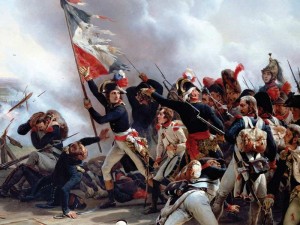
In early July, a feeling of total panic raged in the rural areas of Normandie. In cities, especially Paris, the atmosphere is getting tense. The nobles and their accomplices began to be threatened. On July 14 the people of Paris rose and attacked the armory, seizing the Bastille [11], which was also used as a State prison and was a symbol of the king’s arbitrariness. [12]
On Tuesday, July 14, 1789, about nine hundred Parisians gathered around the Bastille prison. Their aim was to seize ammunition, then demand that the cannon be handed over to the Paris militia. The Bastille Prison was currently being guarded by 82 invalides. The warriors were also strengthened by 32 troops from the Swiss Salis-Sanade regiment. The lack of escort clearly made panic governor Bernard-Rene De Launey who also doubles as the head of the prison. [13]
At ten in the morning, two people were sent to meet De Launey. But the meeting did not produce results, until the masses began to fierce, and finally heard a loud cry, “assaulted Bastille!”. The tense situation then moved de Launey to blow up 250 barrels of gunpowder. Bequard – a soldier – persuaded de Launey not to do it because there would be many citizens who were roasted alive. At 3:30 pm, civilian troops and people’s ranks reinforced the nine hundred Parisians. Bestille was finally attacked. The fighting killed 83 civilian soldiers, 15 died of serious injuries, and 1 invalides died. The fate of Launey himself must end tragically. His neck was cut using a folding knife by Desnot, and his head was displayed in front of the de Ville hotel.
July 14 is celebrated as France’s national day. The Paris rebels formed a rebel city council, a national guard force, and created a blue, red (Parisian) color, and white (king color) color, which was then used as the color of the French flag. While the national anthem is Marseillaise. The revolution continued to spread throughout France in a flash. In all provinces armed people seized power from city councils. The peasants invaded Puri seigneur and demanded that the archives of the feodeux droits be burned. The rebels frightened one another, causing a great panic in three quarters of France for fifteen days. The end of the peasant revolt was the abolition of the feudal system. [14]
The end of the life of king Louis XVI and his wife is very tragic. In 1792, the Legislative Council made two important decisions, namely abolishing the old form of government, namely the monarchy to become the republic of France, and sentenced guillotine to Louis XVI and his wife, Maria Antoinette, and other captured royal nobles. The execution of the king Louis XVI was carried out in January 1793 at 10.20. He was slaughtered with a knife made by Dr. Joseph-Ignace Guilotine. His head separated from his body was displayed to the public. While the execution of two thousand people was carried out in September 1792.
After becoming a republic, France was led by Robespierre (1793-1794). But the riots continued. The bourgeoisie finally succeeded in overthrowing Robespierre’s power in 1975. Then, five directors consisting of Barra, Moulin, Gobier, Roger Ducas, and Sieyes formed a ruling directorate government until 1799, and were later dissolved by Napoleon [15] who at that time served as consul. In 1804, Napoleon appointed himself emperor of France which was inaugurated by Pope Pius VII. The contribution of a Napoleon Bonaparte to France was in the military sphere, although his ambition to unite all of mainland Europe ended in failure.
The State of France Post-Revolution
The French Revolution does have implications in all aspects of life, but the most prominent is the scientific revolution and the birth of new ideas that are very significant, such as liberalism, democracy, and nationalism as the development of the slogan echoed during the revolution, namely Liberte (freedom ), egalitarian (similarity), and fraternette (brotherhood).
In addition, the emergence of the development of natural sciences with Newton’s fiisca model that influenced the philosophers’ thinking and the appearance of the name Auguste Comte who wrote several books about post-revolutionary society. Another most significant impact was the collapse of the old regime, namely the absolute monarchy system under the leadership of King Louis XVI. The old regime was then replaced by a new order of power, in the form of a republic. Then become France as a republic.
Not only in the field of politics, the French revolution led to changes in the economic field in France. A very significant thing is the abolition of the feudal system. Excessive tax collection and previously very burdensome to the peasants, were finally abolished by the nobility and priests. Tax payments are also submitted to the State for the progress of the nation. In addition, the people also have the right to own land. [17] In the social field led France to the formation of the working class, peasants and capitalists.
Conclusion
The French Revolution that occurred in 1789-1794 was a major revolution which would later give birth to many fundamental changes in France. Many factors lie behind the outbreak of this revolution, including the pressures experienced by farmers, both pressures originating from nature and pressures caused by taxes imposed on them. In addition, the inadequacy of the king Louis XVI who was then the holder of absolute monarchical power in France was also one of the factors that led France to the revolution.
After experiencing a long and serious dynamics, the Bastille prison was finally taken over by the revolutionaries on July 14, 1789. After the old regime was broken down, many changes occurred in France. Among them is a change in the system of government which was originally an absolute democracy and then converted into a French republic. The abolition of the feudal system was also one of the effects of the outbreak of the revolution in France, as well as several other effects that were explained in the previous chapter.
Zoroastrian History
Zoroastrian Religion is an ancient Persian religion that has existed for thousands of years. This religion can be regarded as one of the oldest monotheistic beliefs in the world that still exists today.
Judging from its history, Zoroaster was the state religion of three Persian dynasties and survived until the conquest of Persian Muslims in the 7th century AD.
In the midst of the emergence of Islamic power, Zoroastrians fled from Iran by emigrating to India. Zoroaster now has around 100,000 to 200,000 worshipers worldwide, and is now practiced as a minority religion in several regions of Iran and India.
Zarathrustra Reform
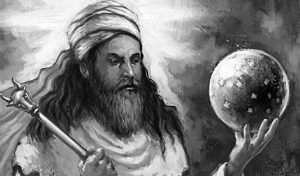
Zarathrustra was the founder or pioneer of the Zoroastrian faith. Most of what is known about him comes from Avesta – a collection of Zoroastrian religious scriptures. However it is unclear exactly when Zarathrustra lived.
Some scholars believe Zarathrustra lived during Cyrus the Great, a Persian king from the sixth century BC. Although most of the linguistic and archeological evidence shows an earlier date – sometime between 1500-1200 BC or even older.
Zarathrustra is thought to have been born in what is now northeast of Iran or southwestern Afghanistan. He probably lived in a tribe that followed an ancient religion with many gods (polytheism), a belief similar to the initial form of Hinduism.
According to Zoroastrian tradition, Zarathrustra had a divine vision of the supreme being while taking part in the purification ritual of paganism at the age of 30. He then began teaching followers to worship a single god named Ahura Mazda.
Zoroastrian Principal Teachings
God
As a reformer at a time of polytheism, Zarathustra called for the teachings of monotheism to worship a single God, the creator of all things and all of nature, both in the form of essence (spirit) and matter (maddah). Ahura Mazda is the pure, pure essence of all material forms which cannot be seen by eye’s eye and cannot be grasped by human reason.
The essence of Ahura Mazda is divided into two. First, it is transcendent (celestial) symbolized by the sun. Second, it is immanent (ardhi) which is symbolized by fire. Both are elements that emit light, illuminate the universe, are holy and are not contaminated with badness.
Based on these characteristics, followers of the Zoroastrian religion who purify and sacred fire. Although in the end made the religion shifted from monotheism to paganism. Zoroaster also changed to religion of pantheism and paganism. The fire itself eventually changes from being merely a gesture to the Creator itself.
Human
In the “Book of Advice of Zartusht” there is the concept of man. That man was originally a supernatural being and his spirit existed before his body. Both the body and the spirit are created by Ahura Mazda and the spirit is not eternal.
Man belongs to God and will return to him. While Angra Mainyu is an opponent of God.
Humans are free to choose between good and bad. Whoever chooses good and truth then he will reap the rewards of the eternal afterlife. As for those who choose evil, he too will be tormented in hell.
Ethics
The teachings of the Zoroastrian religion mostly focus on ethical issues. Its theological rationale has a core moralistic view of life.
The main and inevitable fact of life is ugliness. Good is good and bad is bad. Rejecting the existence of separate principles and ugliness is the same as connecting or linking evil to God. Therefore ugliness is certainly something that stands alone and separately.
The morality of the teachings of the Zoroastrian religion is expressed in three words namely: humate, huklit, and huvarsht which means good thoughts, good words, and good deeds. The main thing of all three is good deeds.
Dead
Followers of the Zoroastrian religion do not allow burial and burning of deceased corpses, because they assume that it will tarnish water, air, earth, and fire. Every death ceremony was led by a priest and held in the Bachram temple, the largest temple for followers of Zarahustra with its fire burning.
In the implementation of the rite of death that is by placing the body on the Dakhma or tower of silence (tower of silence). There is a clear division of places for men, women and children. The stages carried out during the ritual of death are as follows:
The corpse is kept in a room at home for three days before being brought to Dakhma, a place to carry out the ritual of death.
In the Dakhma (tower of calm) the corpse is undressed, then put to sleep on an open tower so that the corpse is eaten by crows or vows.
After the meat has been eaten by the birds, the bones are left to be thrown into the well.
Court after death
According to Zoroastrian religious teachings that every human spirit that has died will roam for three days around his body. On the fourth day, the spirit faces trial on the “bridge of vengeance”. The bridge is guarded by Lord Rashu who acts as a very fair judge in weighing the good and bad deeds of humans. If his good deeds are heavier, the spirit is allowed to go straight to heaven, but if his bad deeds are heavier or bigger then the spirit will be drawn and put into hell.
Meanwhile, if good and bad deeds are balanced then the spirit will be taken to a place called Hamestagan or a mixed place. In this place the spirits will experience improvement by feeling the pain in the form of heat and cold.
Hell in Zoroastrian religious belief is not a place of eternal torture. Hell is only temporary and is a place of purification from human taints and sins. The end of the cleansing of sins takes place at the time of judgment (reckoning) ie at the end of time.
Thus the spirit will face two trials, namely: the court at death and the general court on the Day of Judgment when the human body is raised and reunited with his spirit.
For the teachings of the Zoroastrian religion, the judgment on the Day of Resurrection is followed by the final purification of the taints and sins so that all become holy without blemishes. There is no eternal torment and all humans eventually enter heaven.
Resurrection Day / Doomsday
Zoroastrians believe the end will definitely happen. On the Day of Judgment he will be raised again from his grave to receive the results of his actions while living in the world.
Human deeds are then weighed, very few good deeds will fall from the bridge into hell. Meanwhile, those who have poor charity can cross the bridge safely to heaven. The bridge is called Civant (a concept similar to the Shirathal Mustaqim bridge in Islamic religious beliefs).
At that time all the evil spirits were destroyed by Ahura Mazda including Angra Mainyu also destroyed.
The concept of heaven according to the teachings of the Zoroastrian religion is very simple. Heaven is like a place of reunion for very large families and in it is like an ideal world life. Life in heaven is a natural refinement of life on earth. That’s where the whole family gathers in an eternal life and eternal enjoyment.
The Existence of Zoroastrian Religion in Cross History
Zoroaster became the official religion of one of the greatest empires of the ancient century, the Persian Empire. The existence of this religion can be said to be long, because it is able to survive for three dynasties before being destroyed by the presence of Islam.
Cyrus the Great, founder of the Achaemenid Persian Empire, was a devout Zoroaster. According to most records, he was a tolerant ruler. This is evidenced through a policy that allows non-Iranian people to practice their own religion. In addition he ruled using the Zoroastrian Asha (truth and truth) law, but did not impose Zoroastrianism on people from his territory conquered by Persia.
Zoroastrian concepts, including the idea of a god, heaven, hell, and judgment day, were probably first introduced to the Jewish community in Babylon, where people from the Judean Kingdom had lived in detention for decades.
When Cyrus conquered Babylon in 539 BC, he freed the Babylonian Jews. Many returned to Jerusalem, where their descendants helped create the Hebrew Bible.
The Persian Muslim conquest between 633 and 651 AD led to the fall of the Sassanian Persian Empire and the decline of Zoroastrian religion in Iran. Over time, most of Zoroastrian followers of Iran converted to Islam.
Meanwhile, some Zoroastrians fled from Islam to India. These people are known as Persia.
Experts speculate that the group sailed across the Arabian Sea and landed in Gujarat, a country in western India, between 785 and 936 AD.
Now Persians become ethnic minorities in India and Pakistan. There are currently around 60,000 Parsees in India and 1,400 in Pakistan.
Joseph Goebbels Story
EVEN though his stiff face was calm, Dr. Joseph Goebbels is raging. That morning, April 29, 1945, the situation of the city of Berlin was increasingly tense considering the Soviet Union increasingly approached the Führerbunker or bunker in the Reichkanzlei complex (German Chancellery). It was on this day that for the first time Goebbels refused Hitler’s orders.
After attending a breakfast “party” Hitler’s marriage with Eva Braun, Goebbels asked Hitler to try to get out of the city of Berlin. Hitler felt compelled to be a captain who had drowned with his ship.
Traudl Junge, Hitler’s personal secretary, still remembers very well when Goebbels entered his room. At that time, Junge was outsourcing the handwriting of Hitler to his typewriter.
“Suddenly Goebbels entered without me noticing. His face looked pale as white as chalk. Tears ran down her cheeks … her usually clear voice trembled. ‘The Führer wants me to get out of Berlin, Miss Junge. I was ordered to lead a new government in the north. But I cannot leave Berlin and the Führer! I am Gauleiter (district head) Berlin and this is my place. “If the Führer dies, my life is meaningless,” Junge was quoted as saying by T. Thacker in Joseph Goebbels: Life and Death.
Goebbels then dictated his will and asked to type Junge. “For the first time in my life, I had to refuse to obey the Führer’s orders. Likewise my wife and children. “My heart cannot leave the Führer alone when he needs it … with my wife, it is better to end life on the Führer’s side,” reads the piece of Goebbels’ will.
The next day, Goebbels also awaited the end of Hitler’s life. From the far end of the door of the room, Goebbels heard himself twice the sound of a gun burst from behind the door. He could only stand stiff when the Führer’s body was taken to the outside courtyard of the bunker to be burned with gasoline. The day after, May 1, 1945, Goebbels with his wife and six children followed the Führer to the afterlife.
Assembling Boy and Devout Catholic
Paul Josep Goebbels, that’s the name given to the baby born Katharina Odenhausen, a German-Dutch crossbreed woman, in Rheydt, a “district” in Mönchengladbach, on October 29, 1897. The fourth child of six siblings lived in a middle-upper family, where his father earned a living as a clerk in a factory.
Citing Goebbels’ information, historian Peter Longerich in Goebbels: A Biography revealed, Goebbels in his childhood became a disease boy. In addition to experiencing problems with his lungs, he has a CTEV (Congenital talipes equinovarus) abnormality on his right foot, making his right leg thicker but shorter than his left leg.
As a result, Goebbels is limping and must always wear special shoes of different sizes. The disorder also made him refused entry to the military when World War II raged. But he was not broken. He remained a devout Catholic young man and was diligent in church.
His parents hope he becomes a priest. However, Goebbels is more fond of literature and world history. Then that was the direction he took when he got the Albertus Magnus Society scholarship and was accepted at Prinzenuniversität (now Bonn University).
A brilliant Goebbels student. He completed his studies at Julius-Maximilians-Universität Würzburg, Albert-Ludwigs Universität Freiburg, Ludwig-Maximilians-Universität München, to Ruprecht-Karls-Universität Heidelberg. He earned a doctorate after completing a dissertation on the literary figure Wilhelm von Schütz. He chose the topic on the advice of Max Freiherr von Waldberg, a professor of Jewish blood who was his supervisor.
Goebbels did not mind being guided by a Jew because his youth had never been in contact with antisemitic matters. Goebbels’ student period was only filled with greed devouring a variety of books, including books left by Karl Marx, Friedrich Engels, Rosa Luxemburg, August Bebel, and Gustav Noske.
“But starting in 1924, Goebbels began to fall in love with the charisma of Adolf Hitler. Especially when Hitler sat on the defendant’s chair in February 1924 over the Beer Hall Putsch incident (8-9 November 1923). “His trial became hot news in the newspapers and Goebbels began to build his admiration for Hitler,” Longerich revealed.
Nazi Minion to Death
Out of his admiration, Goebbels regarded Hitler as his mentor when Goebbels chose to go into politics and join the Nationalsozialistische Deutsche Arbeitpartei (German Socialist National Workers’ Party) which was popularly known as the Nazis. Goebbels began to become a cadre in December 1924, after Hitler was released from prison.
Goebbels’ first assignment as a cadre was in the office of the secretariat of the Rhine-Ruhr District branch of the Nazi Party under Gauleiter (branch head) Karl Kaufmann and Gregor Strasser. Only two years later he met Hitler for the first time. It happened at the Bamberg Conference, February 14, 1926, where Hitler summoned all party branch heads.
“I really love him … He has a mind that encompasses everything. His thinking is really brilliant. I bow to this great figure, a genius politician, “Goebbels said flatteringly in his diary, quoted by Ian Kershaw in Hitler: A Biography.
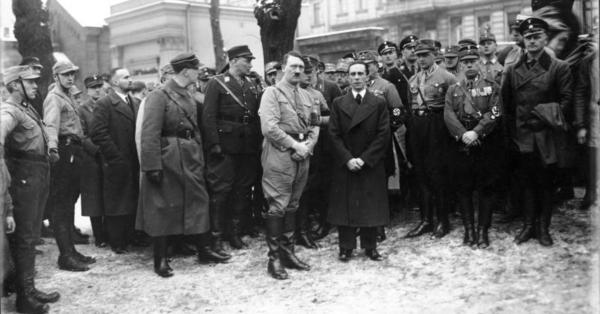
During the meeting Hitler also felt Goebbels as an accomplished orator like himself. Hitler then promoted him as Gauleiter Berlin as of August 1926. Since then, Goebbels and Hitler have been inseparable.
Of all the reforms carried out by Goebbels, where he only reported directly to Hitler, there were two things that became the main factors supporting Hitler’s permanence as party leader. First, Goebbels overhauled party membership. As a pilot project, in the Berlin district it leads, Goebbels set membership fees and requires each member to pay again to be able to attend party meetings. That was done to consolidate and clean the party of members who could potentially deflate Hitler. The reshuffle resulted in a reduction in members of the Berlin district from approximately 1,000 to 600 committed members. The step was then followed by all other districts.
Second, Goebbels advised Hitler to film every party parade and Hitler’s speeches. Goebbels saw the film media was booming in Germany at that time. He also predicted the films could later be screened and would reach wider investigators.
Goebbels’ maneuvers helped Hitler’s steps to the throne as chancellor on January 30, 1933. To celebrate Hitler’s reign, Goebbels insisted on the holding of the torch relay in the streets of Berlin which included 60 thousand cadres of Sturmabteilung (SA) and Schutzstel (SS). The grand celebration was broadcast on the radio and filmed.
“But he was disappointed because in the new cabinet formed by Hitler, he was not given the position of minister of culture. The position he coveted. It was only on March 14 that Goebbels was given a position in the newly formed ministry, the State Ministry for Information and Propaganda, “continued Longerich.
With this position Goebbels made grand events like the 1934 Nürnberg Parade which was then filmed by filmmaker Leni Riefenstahl with the title Triumph des Willens. The film even won the Venice Film Festival gold medal in 1935.
With this position, Goebbels also created anti-Semitic doctrines. He began by summarizing a decree related to the boycott of Jewish businesses, signed by Hitler on April 1.
Goebbels also helped move the submission of Germany to host the 1936 Olympics. The global stage could be used as a promotion for the hegemony of the Nazi regime on German soil. That was done in order to cover up a number of Nazi antisemitic doctrines and policies. One of Goebbels’ famous racist policies was to require every Jew to wear the yellow star of David.
Not only the Jews, the Nazi regime also had a clash with the clergy, both from the Catholic Church and Protestants. As a result, many religious people were executed. Protest from Pope Pius XI through his exclusion, “Mit brennender Sorge”, Goebbels replied with a speech before 20,000 Nazi masses in Berlin, May 28, 1937 campaigning that the Catholic Church in both Germany and the Vatican was morally corrupt. Furthermore, Goebbels used his authority to prohibit lectures in the church relating to the criticism of the Nazi regime.
After Hitler began World War II, Goebbels was responsible for censoring all news from the battlefield. Propaganda of victory from the front lines is sure to be news that may be milling about on radio broadcasts.
Entering 1944, when Germany was near defeat, Goebbels initiated the formation of Volksstrum, a kind of paramilitary army, on October 18, 1944. Recruitment at Volksstrum was initially voluntary, but when the Soviet Union began to surround Berlin, all citizens were required to take up arms, regardless of the boy’s runny nose or already. old.
Berlin’s increasingly tense condition in April 1945 made him think that it was impossible for him and his family to live in Germany without Nazism. Goebbels also refused Hitler’s order to get out of Berlin.
On May 1, 1945, Goebbels and his wife, Magda Rietschel, stuffed cyanide capsules to their six children: Helga, Hildegard, Helmut, Holdine, Hedwig, and Heidrun. Then at 20.30, Goebbels and Magda went out to the bunker yard. With a gun in hand, Goebbels shot Magda and then shot himself in the head. Both of their bodies were doused with gasoline and burned by Goebbels aide, Captain Günther Schwägermann, just like Hitler who had gone to the afterlife the day before.
Korean Rebellion in the Land of Java
The old PHOTO seemed to talk a lot. Thirteen East Asian youth dressed in Japanese soldiers pose facing the camera. One of them appeared to be holding a small dog. Not many people know, if in fact the soldiers were not Japanese.
“They are Korean youth who were sent by the Japanese military to Java in 1942,” said Rostineu, an observer of Korean history from the Faculty of Cultural Sciences, University of Indonesia.
Once, in May 1942 the Japanese military mobilized 3,223 Korean youths to the Southeast Asian region. Most of them were assigned as gunsok (Japanese army aides) in Burma, Malaya, Singapore, the Philippines and Indonesia.
“Their ages range from 20-35 years,” Rostineu said on the sidelines of a discussion on the Role of Korean Warriors in the Indonesian Revolution held by Historika Indonesia in collaboration with KCC (Korean Cultural Center) in Jakarta on Saturday (18/8).
Phorokamsiwon
Jakarta, September 14, 1942. A Japanese warship coming from Busan, Korea docked at the Port of Tanjung Priok. The ship was loaded with approximately 1,400 Korean gunsok who were assigned as phorokamsiwon (prisoners of war) in Java.
Since December 1944 the Korean youths have been distributed to various cities in Java. They were placed as Japanese prisoners of war in Jakarta, Bandung, Cilacap, Ambarawa, Surabaya, Jember and Malang. Although mobilization workers do not mean they work without pay.
According to Jeon Jeong Gun in Akamichireul Nomoso (Crossing the Equator), the phorokamsiwon in addition to receiving a monthly salary of 50 Yen, they also received various facilities such as uniform replacement.
“There is a contract of employment between them and the Japanese government for two years,” wrote Jeon Jeong Gun.
However, the practice of discrimination remains inevitable. Instead of being considered partners, Korean combat workers often receive unfair treatment from their Japanese superiors. Not infrequently the small mistakes they make are always exaggerated to the extent of severe punishment.
Rostineu stated that in addition to cruel and unfair treatment, there was a major reason for the phorokamsiwon to hate their employers. That happened when the Japanese military unilaterally through Colonel Nakada Seiichiro, one of the commanders of the Japanese army in Southeast Asia during World War II, extended the period of their employment contracts.
“This is what caused the seeds of rebellion to begin to emerge among the phorokamsiwon,” Rostineu told Historia.
Ambarawa incident
The anxiety over the treatment of the Japanese military also happened to the phorokamsiwon in Camp Ambarawa. Realizing their position was increasingly threatened by discriminatory treatment by the Japanese military, then on December 29, 1944, 120 phorakamsiwon (out of a total of 200 people) secretly established an underground organ named Hangukdokripkinyeomgwan (Korean Youth Fighting Youth Group).
The secrecy of this underground organ was exposed during the riots in Ambarawa Camp on January 4, 1945. There were three members of the Hangukdokripkinyeomgwan, namely Sun Yang Sup, Min Yeing Hak, and No Byung Han, who refused to be moved to Singapore. They fight punishment by attacking one of their Japanese superiors. The attack was met with resistance from Japanese soldiers. Furthermore, riots escalated in Camp Ambarawa.
“A great battle is inevitable, but because the Japanese military is in a stronger position, the resistance of Korean youth is broken,” said Rostineu, who once wrote a thesis for the Korean Study and Culture Program at the FIB UI entitled the Korean Gunsok Independence Movement in Ambarawa.
Although rarely reviewed in Indonesian history, the incident at Ambarawa was quite shocking to the Japanese military government in Indonesia. As a result of the incident, 12 Japanese soldiers were killed and two members of Heiho Indonesia were injured.
“The existence of two victims from Heiho Indonesia makes this case even more interesting, because it is evidence of good relations between members of the ‘Korean youth freedom fighters’ group and Heiho Indonesia,” Rostineu said.
After the rebellion on the land of Java, the Japanese military carried out a large-scale purge at Camp Ambarawa. Rostineu said there were 12 Hangukdokripkinyeomgwan members who were arrested after the incident. While three other members who were rated as provocateurs were found dead in custody. The Japanese say they committed suicide.
The Northern and Southern Regions of Korea are Divided
The Battle of Triangle Hill or Operation Showdown occurred October 14 to November 25, 67 years ago, when the Korean War raged. The battle occurred because of the agenda of the US-Soviet cold war. Impact, the Korean region is divided into North Korea and South Korea.
The Korean physical war lasted from 1950 to 1953. The war began with the invasion of the North Korean bloc against southern Korea. The attack was allegedly because South Korean regional leader Syngman Rhee spread his liberal ideology around the border of the two regions. Finally the war between the two regions was inevitable.
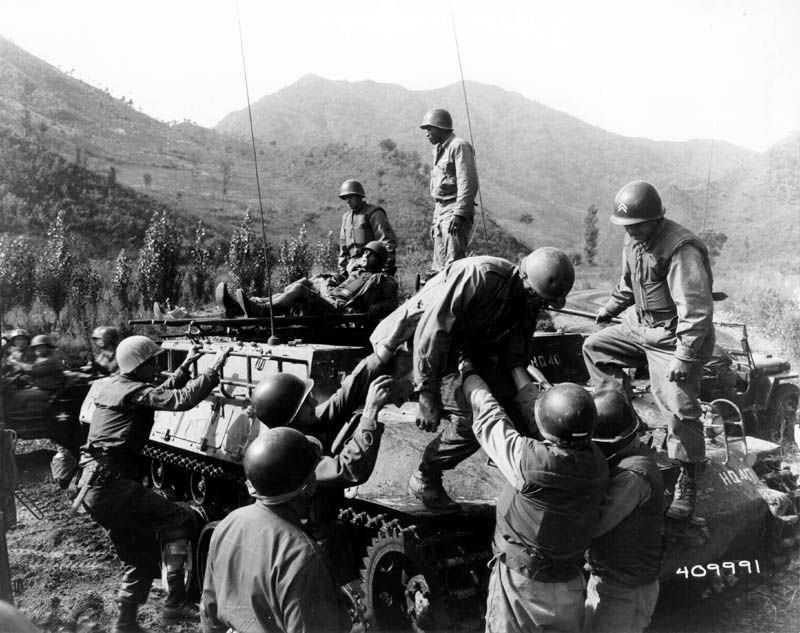
The North Korean bloc is aided by Chinese formed troops (People Volunteer Army / PVA). Meanwhile, the Soviets supported weapons and instruments of war. Meanwhile, seeing the territory of South Korea being invaded, the United Nations did not remain silent. United Nations troops and the United States military are helping South Korea.
A series of events occurred in a physical war that lasted about three years. One of the monumental is the battle of the Hill of the Triangle or Triangle Hill. Walter G. Hermes in Truce Tent and Fighting Front (1992) called the war the biggest and bloodiest war in 1952.
Triangle Hill is located in Gangwon province, South Korea, which borders North Korea. Triangle Hill became a contested location of the two countries at that time.
Operation Triangle Hill is also called Showdown operation, meaning that the UN is calling for simultaneous attacks on the Triangle Hill and Sniper Ridge areas.
Two battalions were deployed for the operation. One battalion from the 31st US Infantry Regiment, 7th Infantry Division ambushed Triangle Hill. While one battalion from the 32nd Regiment of the Republic of Korea (South Korea / ROK), the 2nd Infantry Division attacked the Sniper Ridge area.
In the operation, the UN predicts the attack will not last more than five days with a maximum death toll of 200 people from the United Nations. The prediction is based on the assumption of the maximum number of artillery and support from air strikes will be available.
But on the North Korean bloc side, Triangle Hill is defended by the 8th and 9th Kompani, while the Sniper Ridge area is protected by the first Kompani consisting of the 135th Regiment, 45th Division, and 15th Troops.
They have also prepared defenses against possible attacks. In this effort they built a complex defense network. For example they made tunnels as far as 9,000 meters, 50,000 meters of trenches, and 5,000 meters of minefields.
As a result of the Triangle Hill operation, 365 US troops were killed, 1,174 injured, and 1 person captured. While from South Korea 1,096 people were killed, 3,496 people were injured, and 97 people were missing.
While from the North Korean bloc originating from Chinese sources, there were 4,838 people killed, and 6,691 people injured. While the United Nations estimates the number of victims from the South Korean side to reach 19,000 people.
Early Korean split
Long before the Korean War occurred, Korean territory was under Japanese rule. Pressure from the Japanese occupation made Korean nationalism rise. As a result they had a chance to create an independence movement called the united Korean people’s movement on March 1, 1919. Then Korean figures from various ideological backgrounds such as Syngman Rhee, Park Eunsik, Yi Donghwi, Kim Kyusik and Lee Dongnyeong came together. They established Korea’s interim government.
They then formulated the constitution and brought it to China on April 11, 1919 for a declaration of government. China was chosen because before Japan came to power, Korean territory was under the rule of the Qing dynasty. Then on April 13, 1919 the declaration was held in Shanghai and Syngman was appointed president.
Although the Korean government has been formed it does not really have a positive impact on Koreans. In fact they are under increasing pressure from Japan. Because Japan was still very strong at that time.
This pressure lasted until Japan surrendered to allies in World War II. This practically makes the former Japanese occupation experience a power vacuum including Korea.
The momentum was then used by Korean leaders to reunite the Korean region or known as Unification. So at that time there was a temporary division of territory. The North was secured by Communist ideology headed by Kim il-sung, while the South was secured by the Liberal ideology led by Syngman Rhee.
It was the divisions that manifested in the Korean War that until this moment made Korean territory divided in two.