History Gif

Graphics Interchange Format (GIF) is a format that is often used in the web world and in the world of digital imagery. This GIF allows users to create simple animations that will make repeated movements so that it looks unique.

GIF which is now widely spread on various websites and applications shows short animations that make repetitive movements. But initially, GIF is a way to display photos.

The history of GIF began when Steve Wilhite started working on GIF in early 1986. At that time, he was a programmer for Compuserve – an online service that allows users to access chat rooms, forums and information such as stock prices.

Sandy Trevor, Wilhite’s supervisor at Compuserve, told WIRED that he wanted to solve two problems. First Compuserve requires a graphic format that works on all computers.

At that time the PC market was divided into several companies including Apple, Atari, Commodore, IBM and Tandy, each of which had its own way of displaying graphics.

Compuserve had used other graphic formats in that era, such as NAPLPS, but Trevor considered it too complicated to apply. As a result he commissioned Wilhite to create a simple format that could work on any machine.

The second wish, Trevor wants Wilhite to create technology that can quickly display sharp images even on slow connections.

“In the 80s, 1200 baud was high-speed. Many people only have 300 baud modems, “Trevor said.

The average broadband connection in the United States is 40,000 times faster than a fast 1200 baud connection, so Compuserve requires very small files.

Another major web image format, JPEG, was being developed at the time. However, the format is more suitable for photos and other images that contain high amounts of detail and will not experience slight distortion.

Meanwhile, Compuserve requires a format to display stock prices, weather maps and other charts. As a result Wilhite decided to base GIF on a lossless compression protocol called Lempel-Ziv-Welch, or LZW.

Wilhite completed the first version of GIF in May 1987, and Compuserve began using the format the following month. This was recorded two years before Sir Tim Berners Lee announced his World Wide Web project and six years before the Mosiac browser made the web accessible to users, to make GIF as it is today.

GIF is fairly perfect for displaying logos, line art, and website diagrams like Wilhite’s first developed format. Because GIF images are transparent, it allows website designers to make more complex layouts.

Wilhite himself has the foresight to make his GIF expandable so that other developers are able to add other types of information to the GIF. This allowed the team at the Netscape browser to create an animated GIF standard in 1995.

“I’m not asking Steve to add as much as possible to his abilities, but I’m happy to do it,” Trevor said.

Shortly after, GIF adorned almost all websites. “Dancing Baby” became one of the first viral videos on the web. The 7-Up mascot who danced “Cool Spot” also made the first viral GIF.

Unfortunately the GIF firm reaps controversial patent controversy. In 1994, IT giant Unisys claimed to have the LZW protocol that Wilhite used in the GIF specification. The company threatened to sue anyone who makes software that can make or read GIFs without paying a license until finally Unisys’s LZW patent expires in 2006.

Even so, the GIF format still survives on web forums and sites like 4chan, Reddit, and Tumblr. Over time, many people use animation in conversations over the web until GIF becomes a new form of expression.

The rise of smartphones also makes this form of visual communication more attractive to users.

“With GIF you can express a variety of emotions,” said David McIntosh, CEO of Tenor.

Unfortunately, various technologies do not escape abuse. GIF, for example, is used to display negative content that is deemed inappropriate by some groups

Japanese Geisha History

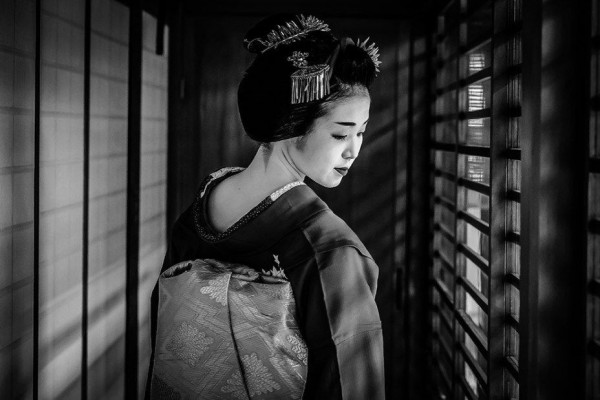
Who does not know or at least has heard of beautiful Japanese ladies wrapped in this kimono. The existence of Japanese Geisha is identical with ‘entertainers’ and some even assume that they are some kind of commercial sex workers.

Japanese geisha in their own country is something taboo to talk about, even though everyone in the world knows about GEISHA’s existence.

Why taboo? Because understanding Geisha likes to be misunderstood by some people. That, yes it was, Japanese Geisha is always with a negative connotation.

But clearly, Geisha is interesting to discuss. Behind the graceful movements, indeed stored side of the mystery that invites a desire to be explored, both the side of the story of its existence and matters relating to the charm of sensuality.

History of Japanese Geisha
The history of geisha starts from the beginning of the Tokugawa government, where Japan entered a period of peace and was not so preoccupied with the problems of war. Indeed, Geisha was identical as a comfort woman at that time. However, they are required to have special expertise.

A prospective Japanese geisha must undergo rigorous arts training at an early age. Practicing Shamizen’s stringed instrument that made the prospective geisha have to soak her finger in ice water. Practicing other musical instruments is also like a small harbor to Taiko.

Not only that, Gisha also has to practice dance which is the key to the success of a geisha, because the top geisha are generally dancers. The Noh Mask Dance which is often played by geisha is presented to the upper classes of society. The segment is different from the Kabuki shows which are preferred by commoners.

What Is Japanese Geisha
Geisha (Japanese: 芸 seniman “artist”) are traditional Japanese entertainers. The word Geiko is used in Kyoto to refer to that individual.

Geisha were very common in the 18th and 19th centuries, and they still exist today, although they are not large in number.

In Kansai, the terms “geiko” (芸 妓) and budding geisha “maiko” (舞 妓) have been used since the Meiji Restoration. The term “maiko” is only used in the Kyoto district. The pronunciation ˈgi ʃa (“gei-” – “key”) or “geisha girl” commonly used during the US occupation in Japan, contains the connotation of prostitution.

In the People’s Republic of China, the word used is “yi ji,” whose pronunciation is similar to “ji” in Mandarin which means prostitution. Geisha learn many art forms in their lives, not only to entertain customers but also for their lives.

Geisha houses (“Okiya”) bring girls who are mostly from poor families and then train them. During childhood, geisha often worked as helpers, then as beginner geisha (maiko) during the training period.

The point is that Geisha are not comfort women, CSWs, or Escort ladies who can be taken to sleep by the adam, but that they were originally there because of career demands and the times that women can also be entertainers.

After 100 years since the Geisha existed, the uncertainty regarding the existence of the Geisha itself began to shift little by little. In Japan there were many adam at that time (husbands) who were dissatisfied with their household, because of the greatness of Geisha who could entertain, dance, make jokes and sing it was no wonder many husbands / men who wanted to find a Geisha as their life partner. And this is one example of the shift of Geisha, which had been a true entertainer hunted by the adam, which is only an escape from his reality.

Japanese Geisha Apparel / Clothing
In 1930, a Geisha appeared like a supermodel, beautiful, elegant, having a sexy body and still respecting ancient Japanese customs. And unique, Geisha woman is very close to the genitals that can invite the lust of the adam. This can be seen from the clothes of the geisha (kimono). And what opens is only the back of the neck in the form of V. The longer the V shape downward means that the Geisha is more provocative.

Did you know? Wearing Kimono is not as easy as we imagine. It turns out that the kimono shirt has 12 layers. And it must suit each suit !! At least, it takes more than 1 hour to wear Kimono perfectly.

And after the kimono is used the woman must adjust her movements. To determine the Young Geisha and Senior Geisha, just look at the color of the collar. If the collar is Red, it means Young Geisha, and if the white collar means Senior Geisha.

Problem Hair, Geisha sometimes wear wigs or hair in the form of waxing to make it more fluffy. and what needs to be avoided is too often washing hair or combing his hair which can result in hair loss or curls cannot expand. And in this case, they wash only twice a month.

A skill that must be possessed by a Japanese Geisha
Traditional dancing ability
Singing Ability
Communication skills
Joking ability
The secrecy that a Japanese Geisha should not do when he is entertaining and they must be good at keeping that a secret:

You can’t look sad, let alone cry
May not accept and give love
You can’t choose love
It must not be seen emotional let alone violent
Why? Because what is forbidden is a sacred thing given by God to humans, namely LOVE.

So, Geisha is not a prostitute. They are true art workers, preserving their culture, entertaining and making others happy. But if you see what is sacrificed for a Geisha to be able to entertain it is really ironic and unbalanced.

In the long history of Geisha, there are a number of facts about them. Perhaps, some have watched the film ‘MEMOIRS OF GEISHA’ a story about the life journey of an orphaned woman who was separated from her siblings, and finally educated to become a famous Geisha. Here are the facts:

Honko / Geisha
First we must know, in fact the geisha profession is not always acted by Japanese women. And it is true that even Japanese men choose to become geisha as their profession. Men who become geisha are called Honko, they also do as geisha do, dance, discuss, sing and accompany their guests in restaurants, bars and tea houses. And based on the record that the first geisha, was a man.

Japanese Geisha Artists
The true meaning of the geisha itself is an artist, artist or artist. But many people of the world who consider the geisha profession is no different from prostitution (PSK). If we search for it in the Google search engine, we will find an understanding that states that geisha are Japanese women who are trained to entertain men by talking, dancing and singing.

Even long ago, geisha were forced to perform a ceremony called mizuage. A ceremony welcomes the arrival of adulthood for a woman. During the ceremony the maikos (geisha who are still in education) are sold to the highest bidder to release their girlhood. However the ceremony is considered sacred and the maiko are still respected.

Japanese Geisha Without Identity (Anonimus)
We may know about the features and stories about Geisha. But they were deliberately created as a mysterious woman. To be a geisha is to be an unknown person, and this is conveyed in his education session. The geisha are required to hide everything that refers to their identity, such as names, home addresses and so on. Even though the guest was truly an honorable man.

Japanese Gisha Aurat
A geisha who is serving guests by making tea drinks will attract her kimono, so that the beauty of the skin on her arms can be seen by the man who is her guest. The behavior is a symbol of sensuality or temptation that will be enjoyed by his guests, and it is indeed required.

The Japanese Geisha Stigma
Like everything about geisha is a negative thing, even though there are many things that cannot be imagined from a geisha, especially in the cultural perspective. Their existence and attitude are very exclusive, so it’s no wonder people will say anything beyond the truth. Even with the modern version of geisha, the concept is far from the actual teachings of geisha, changing all the noble values ​​of geisha as performers of art.

Specially Designed Japanese Geisha Kimono
Because geisha is a person who has various skills, even for kimono they make it themselves. Even though many kimonos are sold in clothing stores, of course they are machine-made, but they always sew it themselves with fabrics made of silk. They won’t replace the kimono, as long as they are geisha. In addition to makeup, they spend two hours to make their faces and appearance beautiful and attractive.

Okiya Japanese Geisha
The geisha work in a place called Okiya, and are scouted by an okasan (hostess). But even though they work hard to accompany guests and even look after and take care of their clients’ homes, their wages go into the pocket of an okasan pocket. The money will be saved and used to care for the houses of the geisha (okiya) and maintain the continuity of the business.

Maiko and Hangyoku (young geisha)
Maiko is a term for a young geisha or girl who is undergoing education to become a Japanese geisha in Kyoto City. But in Tokyo this young woman is known as Hangyoku. To distinguish both of them, the Hangyoku wears a longer kimono with varied motifs so it looks more fashionable. While the Maiko are the opposite, they wear the same kimono with each other, even without the motives in their fabric though.

Japanese Geisha May Not Build A Bond Of Love
To say their name and place of origin, geisha are not allowed, let alone have an affair with a man. They are only allowed to have an affair and get married when they no longer work as geisha, or retire.

Toxins in Japanese Geisha’s Makeup
Tragically, they apply makeup to make it look white with lead powder. The dangerous cosmetics element was only discovered when a study was conducted in the Meiji era.

Those are 10 Facts about Geisha. Behind its mysteriousness, behind its graceful movements, behind its tightly closed makeup and kimono clothes, there is also its appeal. Geisha are indeed able to give charm even to the world.

History of Slavery in America

Slavery in America began when African slaves were first brought to the North American colony in Jamestown, Virginia, in 1619, to assist in the production of profitable plants such as tobacco. Slavery was practiced throughout the American colonies in the 17th and 18th centuries, and African-American slaves helped to build the economic foundations of the new nation. The discovery of gin (cotton seed separator) cotton in 1793 established the importance of the center of slavery for the Southern economy.

In the mid-19th century, America’s westward expansion, together with the abolition of the growing right in the North, sparked a huge debate over slavery that would trigger the American Civil War (1861-1865). Although the Union’s victory liberated 4 million nations from slavery, the legacy of slavery continued to influence American history, from the tumultuous years of Reconstruction (1865-1877) with the civil rights movement that emerged in 1960, a century after emancipation.

Background to Slavery in America

In the early 17th century, European settlers in North America turned to African slaves because it was cheaper as labor and more than poor European employees. After 1619, when a Dutch ship carrying 20 Africans in the British colony from Jamestown, Virginia, spread slavery throughout the American colonies.

Although it is not possible to give accurate figures, some historians have estimated that six to seven million slaves were imported into the New World in the 18th century.

In the 17th and 18th centuries, black slaves worked mainly on tobacco, rice and indigo plantations on the south coast. After the American Revolution (1775-1783), many Colonists (especially in the North, where slavery was relatively unimportant to the economy) began to link the black slave’s oppression to the British oppression of them, and called for the abolition of slavery.

After the war with England ended. The new US Constitution quietly recognizes the institution, counting each slave to three-fifths of the people for taxation and representation purposes in Congress. It can be seen that the US wants to form the basis for slavery by giving every right and service.

The Importance of Cotton Separator

At the end of the 18th century, with land used to grow tobacco almost exhausted, the southern Colonies faced an economic crisis, and the growth of slavery in America became increasingly dubious. Around the same time, the mechanization of the textile industry in England caused a huge demand for cotton to America, the yields of southern colonies whose production was unfortunately limited by the difficulty of separating seeds from raw cotton fiber by hand.

In 1793, a Yankee (a resident of the northeastern United States) who was a young teacher named Eli Whitney invented cotton gin, a simple mechanical device that efficiently separated seeds from cotton. the device was widely used, and in a few years, southern America could produce tobacco and cotton on a large scale. This has caused the need for slave labor to increase.

Slavery itself was never widespread in the North, although many entrepreneurs in the region grew rich with slave trade and investment in southern plantations.

Between 1774 and 1804, all northern states abolished slavery, but the so-called “special institutions” remained truly important for the South. Although the US Congress banned African slave trade in 1808, domestic trade was growing, and the slave population in the US nearly tripled in the next 50 years. In 1860 black slaves in America reached nearly 4 million, with more than half living in the cotton-producing countries of the South.

Slaves and Slave Owners

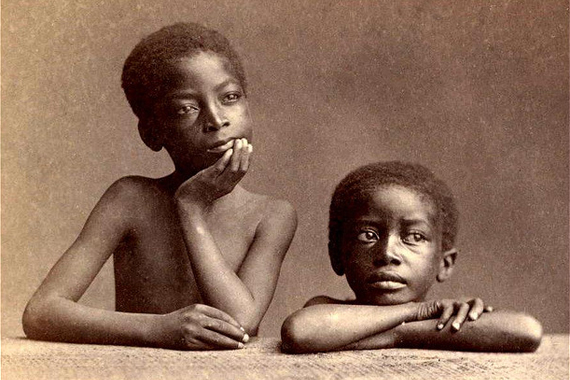
Slaves in America, which is South, are about one third of the southern population. Most slaves lived on large farms or small plantations. Slave owners tried to make their slaves entirely dependent on them, and the system that limited their lives. They are prohibited from learning to read and write, and their behavior and movements are restricted.

Many slaves were used as sexual vents. Those who behave well will get good treatment, while rebel slaves will be brutally punished. A strict hierarchy between slaves, from slaves in a mansion to slaves who became laborers in the rough.

The formation of the hierarchy also triggers them and tends to organize against their masters. Marriage between slaves has no legal basis, but their slaves are allowed to marry and raise their families.

Rebellion by slaves occurred during the enslavement system in America. One of them was carried out by Gabriel Prosser in Richmond (1800) and Danish Vesey in Charleston (1822). The most frightening rebellion occurred in August 1831, led by Nat Turner in Southampton, Virginia. At that time Turnur’s group of about 75 blacks killed around 60 white people.

These rebellions led the camps of slavery supporters to consider that the slaves were barbaric and of low ethics so that they needed slavery to discipline them.

The rebellion that occurred made the southern states of the US strengthen slavery rules by restricting education, freedom of assembly. Unlike in the northern part of the US, the suppression of slavery in the south is fueling an equal movement and abolition of slavery.

The Rise of the Abolition of Slavery

From 1830 to 1860, the abolition of slavery moved in the north of the United States. This movement was led by free black people like Fredrick Douglass and white people like William William Lloyd Garrison, founder of the radical liberation newspaper, and Harriet Beecher Stowe who published the popular novel, “Uncle Tom’s Cabin” (1852).

Meanwhile, many activists who oppose slavery believe that the sale of slaves is a sin, and those who are inclined to non-religionists claim that the sale of slaves is regressive, inefficient, and has little economic value.

The freedom of black people in the north of the US encouraged slaves from the south to flee to the north through a hiding network since the early 1780s. This network known as the Underground Railroad managed to escape the flight of about 40,000 to 100,000 slaves headed north to enjoy freedom.

Slavery Debate in America

The growth and explosion of American expansion westward in the 19th century had an impact on the development of conflict over slavery in America. In 1820 there was a bitter debate about the right of the federal government to limit slavery.

In 1850 it was negotiated on the rules regarding slavery. While all states each have their own legislation regarding slaves, there are many similar concepts that all slave states have. According to slave legislation, teaching a slave to read or write is illegal, although this often happens because children often teach each other.

Although slave legislation has many common characteristics, each state has laws or variations that are compatible with the laws of the place. For example, in Alabama, slaves were not allowed to leave their employers’ grounds without written permission, slaves were also not allowed to trade goods among themselves. In Virginia, slaves were not allowed to indulge in public places within a mile (1.6 kilometers) of their employer’s place or during meetings in public places.

In Ohio an emancipated slave was prohibited from returning to the state where he had been enslaved. In any slave state, slaves were not permitted to carry firearms.

Legislation for the District of Columbia defines a slave as “a human being, whose liberty has been taken for a lifetime, and which belongs to another.”

Civil War and Emancipation
The south reached its peak the following year, when Republican candidate Abraham Lincoln was elected president. Within three months, seven southern states had separated to form the United Confederation; four will follow after the Civil War (1861-1865) began. Despite Lincoln’s established anti-slavery outlook, the purpose of the war was not initially to abolish slavery, but to preserve the United States as a nation.

The abolition of slavery then became a goal in civil war, military needs and growing anti-slavery sentiments in the North, as well as the emancipation of African-Americans. Many black people then joined the American Union forces to fight with the southern region. Five days after the victory of the United States Government in September 1862, Lincoln issued the Emancipation Proclamation and on 1 January 1863 established the abolition of slavery in all US states.

With the enactment of anti-slavery provisions in the US. About 3 million black slaves in the areas of rebellion against the government were freed. About 186,000 black soldiers who initially helped overcome the rebellion then officially joined the US army.

The civil war that ended in 1865 resulted in 38,000 black people being killed. The total death toll is around 620,000 from the US population at that time around 35 million. This is noted as the bloodiest conflict in American history.

Post-Abandoned Periods of Slavery

In the 13th amendment to the US constitution at the end of 1865, it explicitly abolished slavery, although it was still uncertain to fully liberate post-war slavery in the south and the challenges of the Reconstruction Period (1865-1877). At the amendment to the 14th constitution, slaves will be freed and will receive citizenship rights and “equal protection” as US citizens.

Although the constitution guarantees equality of blacks in various fields of life, including American political life. Disappointment persists among black people. Supermasi whites still occur in several US states, such as the development of racist organizations such as the Ku Klux Klan which once triumphed in the south in 1877.

A century later, resistance to racism and discrimination in the United States led to civil rights equality movements in the 1960s achieving political and social benefits.

One figure in equality of rights, Martin Luther King Jr. is a very influential figure in the struggle for equal rights in the United States. He fought for racial equality which was very difficult to obtain at the time. In addition to fighting for racial equality, he is also known as the most influential black figure in the struggle for racial equality in the history of the United States.

Background of the Vietnam War

The Vietnam War was a long-term conflict between the North Vietnamese communist government and South Vietnam and its main ally, the United States. The conflict escalated because it coincided with the Cold War between the United States and the Soviet Union.

More than 3 million people (including more than 58,000 Americans) died in the Vietnam War, and more than half the victims were Vietnamese civilians.

Background of the Vietnam War
Vietnam, a country in Southeast Asia at the eastern end of the Indochina peninsula. This region has been under French colonial rule since the 19th century.

During World War II, Japanese troops invaded Vietnam. To fight the Japanese invaders and the French colonial government, Ho Chi Minh’s political leaders – inspired by Chinese and Soviet communism – formed the Viet Minh (League for Vietnamese Independence).

After the defeat in World War II, Japan withdrew its troops from Vietnam. This withdrawal caused the French-educated Emperor Bao Dai to rise to the top of power.

Seeing the opportunity to seize control, the Ho Viet Minh army immediately moved. As a concrete step they took over the northern city of Hanoi and declared the Democratic Republic of Vietnam (DRV) with Ho as president.

In an effort to regain control of the region, France supported Emperor Bao and established the Vietnamese state in July 1949, with the city of Saigon as its capital.

Both parties want the same thing: a united Vietnam. But both also embrace different ideological concepts.

Ho and his supporters want a nation that mimics the model of other communist countries. While Bao and his supporters want a Vietnam with close economic and cultural relations with the West.

The start of the Vietnam War
After Ho’s communist forces took power in the north, armed conflict between the northern and southern armies aided by France continued until the decisive battle at Dien Bien Phu in May 1954 ended in victory for northern Viet Minh forces. France’s defeat at the battle also marked the end of almost a century of French colonial rule in Indo-China.

The next agreement was signed in July 1954 at the Geneva conference separating Vietnam along the latitude known as the 17th Parallel (17 degrees north latitude), with Ho holding control in the North and Bao in the South. The agreement also requires national elections for reunification planned to be held in 1956.

However, in 1955, the highly anti-communist politician Ngo Dinh Diem removed Emperor Bao and became President of the Government of the Republic of South Vietnam.

With the Cold War expanding throughout the world, the United States issued a strict policy towards allies of the Soviet Union. In 1955 President Dwight D. Eisenhower pledged his strong support to Diem and South Vietnam.

With training and equipment from the American military and CIA, Diem security forces cracked down on Viet Minh sympathizers in the south. He called them Viet Cong (or Vietnamese Communists) and arrested around 100,000 people. Many of them were tortured and brutally executed.

In 1957, Viet Cong and other opponents of the repressive Diem regime began to fight and attack government officials and important figures in South Vietnam. Two years later they began to engage in gun battles with the South Vietnamese army.

In December 1960, many of Diem’s ​​enemies in South Vietnam – both communist and non-communist – formed the National Liberation Front (NLF) to organize resistance to the regime.

Although the NLF claims to be autonomous and that most of its members are not communists, many people in Washington consider the organization to be a puppet of Hanoi, North Vietnam.

Domino theory
A team sent by President John F. Kennedy in 1961 to report on conditions in South Vietnam suggested gathering American military, economic and technical assistance to help Diem deal with the Viet Cong threat.

Based on the “domino theory,” which states that if one Southeast Asian country fell into communism, many other countries would follow suit, Kennedy increasing US aid.

By 1962, the US military presence in South Vietnam had reached around 9,000 troops. This number increased rapidly compared to the 1950s which were only around 800 troops.

United States and Allied Aggression
In November 1963, the President of South Vietnam was coup by some of his own generals. The coup led to political instability in South Vietnam.

The political instability led South Vietnamese leaders to persuade Kennedy’s successor, Lyndon B. Johnson, and Defense Secretary Robert McNamara to further enhance US military and economic support.

In August 1964, after the DRV torpedo ship attacked two US destroyers in the Gulf of Tonkin, Johnson ordered revenge bombing with military targets in North Vietnam.

Congress immediately passed the Tonkin Bay Resolution, which gave Johnson greater war power. With the issuance of the resolution, US aircraft began regular bomb attacks, codenamed Operation Rolling Thunder, the following year.

In March 1965, Johnson made the decision – with strong support from the American public – to send US combat troops to the battlefield in Vietnam. In June, 82,000 combat troops were stationed in Vietnam and military leaders added another 175,000 at the end of 1965 to support struggling South Vietnamese troops.

The policy turned out to increase the concerns of politicians and the population of the United States, thus creating an anti-war movement.

But Johnson remained unmoved by the wave of protest. In addition to the United States, South Korea, Thailand, Australia and New Zealand are also committed to fighting in South Vietnam (albeit on a much smaller scale).

The battle is getting hotter
The South-US Vietnam war effort in the south was more focused mainly on the ground, largely under the command of General William Westmoreland, in coordination with General Nguyen Van Thieu’s government in Saigon.

Westmoreland issued a command to kill as many enemy forces as possible rather than trying to secure territory. In 1966, large areas of South Vietnam had been designated a “war zone”, where all innocent civilians had to be evacuated and only enemies remained.

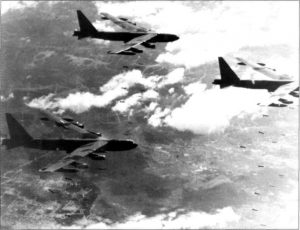
Heavy bombing by B-52s or firing made these zones uninhabitable. Therefore refugees were placed in camps in designated safe areas near Saigon and other cities.

However, the massive attacks by South Vietnam and the US did not deter North Vietnamese troops. Even as the number of enemy troops continued to increase, the DRV and Viet Cong forces still refused to stop fighting. North Vietnamese troops were able to reoccupy the freed areas with the help of troops and supplies through the Ho Chi Minh route that passed through Cambodia and Laos. In addition, North Vietnam is also supported by China and the Soviet Union in strengthening air defenses.

Protests against the Vietnam War
In November 1967, the number of American troops in Vietnam was close to 500,000 and US casualties had reached 15,058 killed and 109,527 injured. As the war continued, some soldiers began to doubt the government’s decision to keep them in Vietnam, along with Washington’s repeated claims that the war had been won.

Entering the final years of the war, US forces have experienced physical and psychological setbacks. This caused new problems in the As troops, because many of them were depressed.

Between July 1966 and December 1973, more than 503,000 US military personnel were displaced and a strong anti-war movement among American troops gave birth to protests against the killings, and mass arrests carried out by US personnel stationed in Vietnam.

Bombarded by horrific images of war on their television sets, US residents turned against the government.

In October 1967, around 35,000 demonstrators staged massive protests outside the Pentagon. Opponents of the war argue that Vietnamese civilians are the main victims and the United States is seen as supporting the corrupt dictatorship in Saigon, South Vietnam.

On the other hand, North Vietnamese guerrillas are increasingly motivated to win the war following the weakening of the power of South Vietnam and the United States.

North Vietnamese Offensive Strategy
At the end of 1967, Hanoi’s communist leadership attempted to make a major blow aimed at forcing the United States to retreat.

On January 31, 1968, around 70,000 DRV troops under General Vo Nguyen Giap launched the Tet Offensive (named for the lunar new year), a series of coordinated attacks in more than 100 cities and cities in South Vietnam.

Although shocked, U.S. troops and South Vietnam continued to fight back quickly, and the communists could not take control of one of the city’s targets for more than a day or two.

The Tet operation report shocked the US public, especially after appearing to say that Westmoreland had requested 200,000 additional troops.

On the other hand US public support for the war continued to decline. These conditions forced Johnson, who was at the end of his term of office, to stop the pace of bombing in much of North Vietnam and promised to dedicate the remainder of his term to seeking peace.

Johnson’s new tactic, laid out in a March 1968 speech, received a positive response from Hanoi, and peace talks between the US and North Vietnam opened in Paris in May.

Unfortunately after South Vietnam and the NLF entered into the talks, the talks were deadlocked.

Vietnamization
The new US President, Richard M. Nixon, is trying to undermine the anti-war movement by trying to attract the support of the majority of Americans who have been silent. He believed they would support the war effort.

In an effort to limit the volume of American victims, he announced a program called Vietnamization. The program was implemented to withdraw US troops, increase air strikes and artillery, as well as provide the South Vietnamese military training needed to effectively control ground warfare.

In addition to this Vietnamisation policy, Nixon continued peace talks in Paris, adding high-level secret talks conducted by Foreign Minister Henry Kissinger which began in the spring of 1968.

North Vietnam continues to demand the withdrawal of the US military as a whole as a condition of peace. The result was that peace talks had stopped.

My Lai Massacre
The following years saw more brutal mass killings, including a horrific admission that US troops massacred more than 400 unarmed civilians in the village of My Lai in March 1968.

After the My Lai Massacre, anti-war protests continued to develop as the conflict continued. In 1968 and 1969, hundreds of protest marches and meetings were held throughout the country.

On November 15, 1969, the largest anti-war demonstration in American history took place in Washington, D.C … At that time more than 250,000 Americans gathered peacefully. They called for the withdrawal of American troops from Vietnam.

The anti-war movement, which is very strong on campuses, breaks US public opinion. For some young people, war symbolizes an uncontrolled form of authority. While for other Americans, opposing the government is considered unpatriotic and treasonous.

When the first US troops were withdrawn, those who remained remained increasingly angry and frustrated, compounded by problems of enthusiasm and leadership. Tens of thousands of soldiers received disrespectful releases for defection and around 500,000 Americans from 1965-73 were required to undergo “military service,” many people fled to Canada to avoid military service.

Increased Strength of Protest Waves
In 1970, a joint US-South Vietnam operation invaded Cambodia. The attack aims to wipe out the DRV supply base there. South Vietnam then led their own invasion of Laos, but was repelled by North Vietnam.

The invasion of these countries, which violated international law, triggered a new wave of protests on campuses across America. One of them, on May 4, 1970, at Kent State University in Ohio, National Guardsmen opened fire and killed four students. At another protest 10 days later, two students at Jackson State University in Mississippi were killed by police.

At the end of June 1972, after a failed attack on South Vietnam, Hanoi finally agreed to compromise. Kissinger and North Vietnam’s representatives drafted a peace agreement in early fall, but leaders in Saigon refused.

In fact in December Nixon authorized a number of bombing attacks on targets in Hanoi and Haiphong. The attack was known as the Christmas Bombing, the attack invited international condemnation.

Vietnam War Ends

In January 1973, the United States and North Vietnam completed a final peace agreement which simultaneously ended open hostilities between the two countries. However, the war between North and South Vietnam continued until April 30, 1975, when DRV forces captured Saigon, renaming it to Ho Chi Minh City (Ho himself died in 1969).

More than two decades of violent conflict have caused great harm to the Vietnamese population. After years of war, around 2 million Vietnamese were killed, while another 3 million were injured and 12 million were refugees. The war destroyed the country’s infrastructure and economy, and reconstruction was slow.

In 1976, Vietnam united as the Socialist Republic of Vietnam. Despite this sporadic violence continues for the next 15 years, including conflicts with neighboring countries, China and Cambodia.

Only under the free market policy that was imposed in 1986, the Vietnamese economy began to improve, driven by oil export revenues and foreign capital inflows.

Trade and diplomatic relations between Vietnam and the US also began to be established in the 1990s.

In the United States, the effects of the Vietnam War lasted even after the last troops returned home in 1973. The country spent more than $ 120 billion on conflict in Vietnam from 1965-1973. This massive expenditure caused widespread inflation, exacerbated by the world oil crisis in 1973 and skyrocketing fuel prices.

Psychologically, the effect is even deeper. The war has broken down America’s invincible myth and has divided the nation. Many veterans return to the negative reactions of the anti-war movement (which considers them to have killed innocent civilians) and their supporters (who see them losing the war).

In 1982, the Vietnam Veterans Memorial was inaugurated in Washington, D.C. On it were the names of 58,200 American men and women killed or missing in the war.


Tragic Fate of Prostitutes in the Japanese Period

Jugun Ianfu was an entertainer who accompanied the Japanese army during the war period. As the name implies, since the years 1942-1945 or the Asia Pacific War period they were required to meet the biological needs of Japanese military troops in a rough, inhumane, and in large numbers. The Ianfu Jugun actually understood that they had resisted the signs of normality or Eastern culture, but the Japanese army’s deception, threats, and terror succeeded in conquering them, so there was no other choice but to become the Ianfu Jugun.

The Beginning of the existence of Ianfu Jugun
The first official Ianjo Jugun Ianfu was first established in 1932 in Shanghai. The establishment was motivated by the spread of rape cases committed by the Japanese army during the Japan-China War. The brutal rape caused venereal disease to spread among Japanese soldiers.

Jugun Ianfu was an entertainer who accompanied the Japanese army during the war period. As the name implies, since the years 1942-1945 or the Asia Pacific War period they were required to meet the biological needs of Japanese military troops in a rough, inhumane, and in large numbers. The Ianfu Jugun actually understood that they had resisted the signs of normality or Eastern culture, but the Japanese army’s deception, threats, and terror succeeded in conquering them, so there was no other choice but to become the Ianfu Jugun.

The Beginning of the existence of Ianfu Jugun
The first official Ianjo Jugun Ianfu was first established in 1932 in Shanghai. The establishment was motivated by the spread of rape cases committed by the Japanese army during the Japan-China War. The brutal rape caused venereal disease to spread among Japanese soldiers.

This certainly weakened the strength of the Japanese imperial army. Therefore the idea emerged to recruit local women, select health and include them in Ianjo-Ianjo as Japanese military brothels.

At the beginning of the formation of the Ianfu Jugun system, the Japanese government hoped that with appropriate entertainment for the soldiers it could improve morale and performance and avoid the venereal disease of its troops.

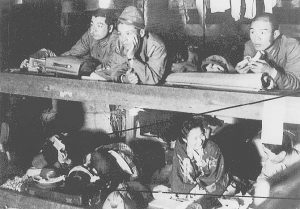
To support the plan, places of entertainment / Ianjo were built for the army in the front line. It was at Ianjo-Ianjo that the Ianfu Jugun were placed to satisfy the desires of the Japanese army. The Ianfu Jugun System is organized in a well planned manner.

At the beginning of the Asia Pacific War, the Japanese government recruited Jugun Ianfu on a massive scale through the conventional method of posting advertisements offering jobs as prostitutes. These advertisements appeared in newspapers published in Japan and Japanese colonies, such as in Korea, Manchukuo, and the Chinese plains.

The response to the advertisement was initially quite good. Many women voluntarily register themselves and there are women who are sold by their own families for economic reasons.

Even so, many women are tricked or tricked into joining military brothels. Even the Japanese forced Hui Muslim girls in China to serve them as sex slaves by establishing a “Huimin Girl” school and enrolling Hui daughters to school to serve as Jugun Ianfu.

Everyday life of the Ianfu Jugun

Health problems are something that cannot be avoided from this kind of work. Therefore, soldiers are recommended to use safety devices or condoms, but not a few of them use condoms that have been dirty, even many who do not want to use these objects.

Condoms provided at entertainment venues are the responsibility of the Army Finance Department and Logistics Headquarters. They are responsible for sending condoms to areas occupied by the Japanese army and also ensuring that condoms are ready for use. In 1942, for example, accounting for 32.1 million condoms had been sent to various units outside Japan.

In Japanese military entertainment venues, women’s reproductive rights are greatly ignored. Although contracting venereal disease is something bad for these women, there is something even worse that is pregnancy.

To prevent cases of pregnancy, women are generally given a kind of herb from plants to prevent pregnancy. When they are already pregnant they are forced to abort their fetuses by using pills.

But there are also places of entertainment that allow the Ianfu Jugun to give birth with certain conditions, but after that they must return to serve the soldiers. In addition to drugs, there are also places of entertainment that sterilize Jugun Ianfu so that they can no longer menstruate.

As the Japanese army expanded its power, the need for entertainment for Japanese troops also increased, in other words voluntary-based prostitution became insufficient. In remote areas that need employment, good paid jobs are attractive in order to meet their needs.

However, when these tactics cannot run smoothly to recruit Jugun Ianfu, direct recruitment becomes a solution. This direct recruitment is a recruitment carried out directly by the police or the local government, which usually uses violence against the women they recruit.

They went to the houses of the people, then kidnapped their daughters to become Jugun Ianfu. In the end, women were conditioned to become sex slaves under the very binding National Mobilization General Law.

Being Jugun Ianfu who was forced to suffer all day long. There are necessities of life for the Ianfu Jugun, Japanese attitudes can be distinguished in two periods, namely the initial period of occupation, which is characterized by abundance, where the needs for the Ianfu Jugun are fulfilled, such as nutritious food, medicines, to bathing facilities, and difficult periods, around 1943, which was marked by a decline in food supplies and tight rationing.

As for the entertainment of the Ianfu jugun, the brothel manager does not provide special facilities except in Telawang in the form of a ticket to watch the play. Near the brothel there is also a restaurant which is sometimes invited by his guest Jugun Ianfu to eat and drink in the restaurant

One interesting practice of Japanese brothels is the name change system, from local names to Japanese names. Everyone who is recruited by Japan will immediately be given a Japanese name and must not forget to use it.

The Ianfu Jugun do not know exactly why there was a change of name. They themselves did not dare to question the change of name. But they suspected that the change was intended to have a special effect on the Japanese who entered the brothel, because they also called the name Jugun Ianfu using the Japanese name.

Jugun Ianfu in Indonesia
In Indonesia, the practice of Ianug Jugun began to take place since the arrival of Japanese troops. Ianjo – Ianjo was established in important cities in Java such as Batavia, Bandung, Ambarawa, Muntilan and Semarang. Not only local women were made as Jugun Ianfu, but Dutch women also did not escape the recruitment process.

Women who do not want to serve the passions of the Japanese Army are threatened with torture and their families will be killed. They were often beaten, kicked and raped the first night. Some of these women were raped by army leaders and also by some brothel managers. One medical officer, who carried out regular health checks on these women, also raped them.

According to testimony, a woman attempted suicide by taking a large dose of quinine, but failed. He was then sent to a mental hospital. Another woman also tried to kill herself by cutting off her veins, but to no avail. Some women tried to escape the brothel, but they were immediately arrested and brought back. A girl was unconscious for two days because she was shocked because she was raped. Some get pregnant and have an abortion.

Entertainers have added to the long list of violent practices during the Japanese occupation. The inhumane treatment they received caused tremendous trauma at that time. Not only that, they must also endure psychological inheritance even after half a century later.

Unveiling the practice of Ianfu jugun
In 1992, for the first time Kim Hak Soon the South Korean victim opened her voice to the Japanese military atrocities against her to the public. After that the issue of Jugun Ianfu was revealed and one by one the victims from various countries spoke up.

Then in 2000 the Tokyo Tribunal was held to hold Emperor Hirohito and the Japanese military accountable for the practice of sexual slavery during the Asia Pacific war. In 2001 a final decision was issued at The Haque Tribunal.

After that international pressure on the Japanese government continued. In October 2007 the United States Congress passed a non-binding resolution that pressured the Japanese government to fulfill political responsibility on this issue. Even so, the Japanese government has yet to recognize what has been done to hundreds of thousands of women in Asia during the Asia Pacific war.

Aztecs in Mexico

Almost simultaneously in the 15th century CE, Latin American and Andean communities each united politically in an empire that covered most of the region. In each region, the establishment of the kingdom was carried out by a new community, from which this new community expanded its political dominion. One of these new communities is the Aztecs.

The Aztecs are known to have high civilization, with artificial floating islands to support their agriculture. Apart from having advanced agriculture, the Aztecs were also known through their cruel human sacrificial ceremonial traditions.

The emergence of the Aztecs
The Aztecs were originally a mob of barbarian smugglers who entered the Telaga District (a refugee area after the collapse of the Toltec Kingdom in the 12th century). In this region they received cultural influences from other refugees, between the art of war and the ritual of human sacrifice.

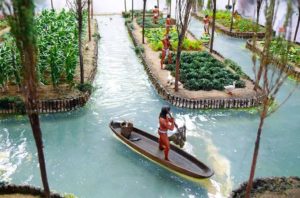
In the last quarter of the fourteenth century, they began settling on several uninhabited islands in the northwestern bay of Lake Texcoco, Mexico. By the Aztecs this new, inhospitable environment was transformed into a habitable area by cutting down layers of lush vegetation and making this new environment accessible. Plant waste is then converted into artificial floating islands for farming.

With a strong will, the Aztecs became skilled urban and agricultural planners. Furthermore, they also became long-distance traders, who combined trade with military-savvy works.

The Aztecs made their way to military and political power through dedication as mercenaries to the rule of the Tepanec kingdom. In 1428, the Aztecs from Tenochtitlan, one of the two Aztec cities, seized the Tepanec empire in the lake-districts they helped build as mercenaries.

The leading figure in the Aztec movement was Tlacaelel, who survived as a political adviser to three successive Tenochtitlan rulers. Tlacaelel began the movement by annexing and combining the twin Aztec city of Tenochtitlan, and its close north neighbor, Tlatecoli. He also allied with other local city states located around Lake Texcoco, namely the state of Acolhua Texcoco, and Tlacopan. This centralization of power under the Tenochtitlan government allowed the Aztecs to establish an empire on the plains of Mexico in 1428 AD with its first emperor, Itzcoatl (1427-1440).

Under the leadership of the second emperor, Moctezuma I (1440-1469), the Aztec was made a strong political and cultural unit with Tenochtitlan as its capital. The Aztecs reached the height of their glory in the Ahuitzotl government (around 1486-1502), which multiplied the territory of the Aztecs. At that time the Aztec region stretched across Latin America, from coast to coast, covering the tip of the Atlantic and also the tip of the Pacific.

The Aztec Kingdom cannot be denied having a large area, but the vast territory is not comprehensive. People who fell under Aztec domination found the rigors of life. The residents were partly depressed because of the placement of permanent garrisons in their area. Under coercion, they were forced to pay high tribute, including boys and girls for sacrifices in addition to food, textiles, stones, and precious metals.

Aztec Life
For the Latin American region at that time, the Aztecs could be said to have high civilization. Aztec residents meet their food needs, by relying on food crops cultivated on a number of Chinampas (artificial islands). The floating islands were built on Danua Texcoco.

The food supply was also supported by agricultural products from the Aztec conquered land, which produced corn, beans, cocoa, cotton, and mining products such as gold, silver and nephrite.

The Aztecs marched around Mexico to what is now the United States, and south to Colombia. They sell high-value goods made by craftsmen such as clothing, jewelry, household furniture, and ceremonial equipment. Traders bought turquoise stones from the Pueblo Indians in the north. From the south a brightly colored bird feather was brought in to make a coat, fan, headdress and shield decoration.

Aztec society is composed militaristically. All young men must serve in the army from the age of 17 to 22 years. Some of them serve longer, if he really has the ability.

The Aztecs took over the Latin American calendar system accurately, and they combined their ancestral religion with the religion of the previous settlers, so as to create a pantheism and complicated rituals such as Hinduism.

They also made manuscripts composed of pictograms and phonemes of word plays, which were more practical than traditional Latin American pictographs, and they produced some very introspective poetic works.

United States Mexico War

The Mexican-American War (1846-1848) became the first armed conflict in the United States that took place abroad. As for Mexico, the war was a major disaster.

In the war, America faced Mexico which was politically divided and militarily unprepared to face US expansionist policies. At that time US President James K. Polk, believed the United States had a real destiny to rule the entire continent in the Pacific Ocean.

Fighting at the border along the Rio Grande marked the start of fierce fighting between the two countries. By the time the war ended, Mexico had lost about a third of its territory, including almost all of California, Utah, Nevada, Arizona, and New Mexico today.

Background of the Mexican-American War
In 1836, Texas gained its independence from Mexico. Initially, the United States refused to include it in the union, mainly because of political interests that opposed the addition of a new slave state.

However, the United States changed its mind and began the procedure of annexation (forced land acquisition to be united with its own land) after the election of Polk in 1844. He campaigned that Texas had to be re-annexed and the Oregon region must be reoccupied.

In addition to the two regions, Polk is also eyeing California, New Mexico and the rest that are now known as the US Southwest.

Polk had tried to buy these areas, but his offer of 30 million US dollars was rejected by Mexico. As a result of this rejection, he began provoking warfare by moving US troops into the disputed zone between the Rio Grande and the Nueces River that was previously recognized by both countries as part of the state of Coahuila, Mexico.

Mexican-American War Begins

Mexico is known to be very protective of its territory and even had time to warn America not to try to annex. Therefore, when US troops began to move into the Rio Grande region, the Mexican military immediately responded.

On April 25, 1846, the Mexican cavalry attacked a group of US troops commanded by General Zachary Taylor in the disputed zone. The attack killed about a dozen US troops.

They then surrounded the American fortress along the Rio Grande. Faced with the siege, Taylor called in reinforcements. With the help of superior rifles and artillery, they were able to defeat Mexican troops in the battles of Palo Alto and Resaca de la Palma.

After the battle, Polk told the US Congress that his patience had run out. He wants to defeat Mexico, before his neighbor begins to enter US territory. Two days later, on May 13, 1846, Congress formally declared war, despite opposition from some members of parliament, the war continued.

While on the other hand, no official declaration of war has ever come out of the Mexican Government.

United States Army Movement
At that time, only around 75,000 Mexicans lived north of the Rio Grande. As a result, US troops led by Colonel Stephen W. Kearny and Commodore Robert F. Stockton were able to conquer the land with minimal casualties. Taylor also experienced little difficulty when he took Monterrey in September.

In the midst of the fierce war, the former president and general of Mexico, Anonio Lopez de Santa Anna who was exiled in Cuba contacted Polk. Santa Anna assured Polk that if she were allowed to return to Mexico, she would end the war on favorable terms for the United States. Polk agreed with the idea, so he immediately sent a ship to bring Santa Anna from Cuba to Mexico.

When he arrived in Mexico, however, he became Polk’s new enemy by taking control of the Mexican army and leading him into battle. At the Battle of Buena Vista in February 1847, many Santa Anna troops were killed so he was forced to retreat.

Despite losing the battle, he actually took part in the Mexican presidential election the following month.

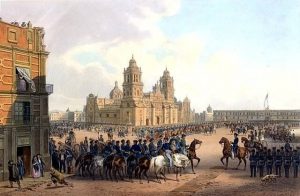
Meanwhile, US forces led by General Winfield Scott landed in Veracruz and took over the city. They then began marching towards Mexico City, which basically followed the same route that Hernán Cortés took when he attacked the Aztec empire.

The Mexicans fought back at Cerro Gordo and elsewhere, but were always defeated. In September 1847, Scott managed to surround Chapultepec Castle in the City of Mexico. During the siege, a group of military school cadets called niños héroes purportedly committed suicide rather than surrender.

End of the Mexico-United States War: Treaty of Guadalupe Hidalgo

Mexican guerrilla attacks on US forces continue, but the end of the war is visible. Santa Anna has resigned and the United States is waiting for a new government capable of negotiating. Thus the United States can be said to have won the war.

Finally, on February 2, 1848, the Treaty of Guadalupe Hidalgo was signed. This agreement concludes the Rio Grande (Formerly the Nueces River) as the new US-Mexico border. In addition, Mexico also acknowledged US annexation in Texas, and agreed to sell California and its remaining territory north of the Rio Grande for $ 15 million. Later the purchased territory became the states of California, New Mexico, Nevada, Utah, Arizona, Colorado, Wyoming, Oklahoma and Kansas.

War for 26 months must be paid handsomely. Of the 79,000 American troops who participated, 13,200 died during the war. Most are victims of diseases such as dysentery, yellow fever, malaria and smallpox. On the other hand, Mexico also lost many troops, most historians estimate that as many as 25,000 soldiers and civilians were killed.

Che Guevara Against Imperialism in Latin America

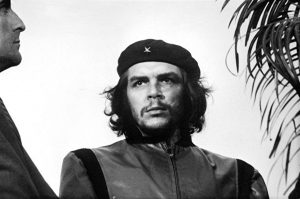
Argentine-born revolutionary Ernesto Che Guevara is famous throughout the world for his commitment to defending international social justice during the mid-20th century. Although he was hated and loved for his guerrilla warfare tactics he advocated in Cuba, Congo and Bolivia, his writings continued to offer insights on world history from an internationalist perspective.

People identify with a sense of social justice, idealism, and rebellion. An Argentine who fights for independence in Cuba, Congo and Bolivia. Guevara is a new human representative without a state committed to international socialism. His published criticisms of capitalism and imperialism reflect an understanding that these two problems and solutions of the 20th century are global.

Che Guevara’s Struggle Background
Ernesto Che Guebara was born in Rosario, Argentina in 1928. He studied at home until the age of 9, due to severe asthma. Throughout his life, he loved to read and in adulthood, he had knowledge of subjects that included literature, Latin American poetry, and Spanish, French existentialist philosophy, Marxism, psychology, and archeology.

In December 1952, Guevara rested for eight months from medical school to go to South America with a friend. On his journey he witnessed the general condition of indigenous peoples throughout South America and was particularly moved by the conditions of copper miners in Chile. He linked the problems of the Latin American economy with large penetration by foreign companies.

After graduating in 1953, Guevara continued his journey to the capital of Guatemala, where President Jacobo Arbenz opposed the claims of the United States of America in the fertile land of Guatemala. In this place Guevara met Hilda Gadea, a Perus activist who introduced her to the idea of ​​Mao Zedong. Together they witnessed a coup sponsored by C.I.A to overthrow Arbenz in 1954, while simultaneously dropping Guatemala into a period of political violence for 4 decades.

The Guatemalan coup further convinced Guevara that the main problem of the American Exercise in the 1950s was “Yankee Imperialism”. He understood this imperialism as a combined political, military and economic power created by US policy makers and companies and their local collaborators on the economies of the Latin American region. This also convinced him that an armed revolution would be needed to overcome the problem in much of Latin America.

Struggle in Cuba

Guevara and Gadea split after the fall of the Guatemalan government, both of whom sought refuge in their respective national embassies. However, by chance they met again in Mexico City and decided to get married.

It was in Mexico City that Guevara met with Fidel Castro, who had just failed to overthrow the dictatorship of Fulgencio Batista in 1953. After serving a prison sentence of less than two years, Castro and other Cuban exiles met again in Mexico City. The meeting developed a relationship between Vsdtro and Guevara.

These exiles shared with Guevara their concern for the strength of the United States that enveloped Latin America and planned to take the fight. Finally, on November 25, 1956, eighty-one Cubans and Guevara launched their invasion of Cuba.

Initially, Guevara was trusted as a doctor in the group, but he also proved himself to be an excellent guerrilla warrior, and earned the highest rank among the rebels.

In January 1958 he and his comrades made it to Havana, which marked the victory of the revolutionary forces in Cuba.

During the war, Guevara founded a school to teach guerrilla fighters to read, print pamphlets, and use radio stations. In Cuba, he met Aleida March who became his second wife. He then published the first official history of the Cuban Revolution and popularized the foco guerrilla war, which argued that a small group of committed individuals could create conditions for revolution on a broader scale.

After the war, Guevara served as industry minister and head of the national bank. However, in many publications, his speech was known throughout the world as the face of the Cuban Revolution which made him a loved and hated celebrity.

As a new human prototype, Guevara is motivated by moral incentives and hopes to eliminate money. He also encouraged international cooperation to build a socialist society. Guevara represented humanist Marxism, offering a new possibility for communists who opposed Stalinism.

End of Guevara’s Struggle
Although known as a diligent bureaucrat, that position does not suit him. In 1965, Guevara disappeared from Cuba. He calmly organized a guerrilla war for independence in Congo.

Despite leaving his Kuban citizenship in a farewell letter with Castro, Guevara returned to Cuba in March 1966.

Next he launched the last failed guerrilla campaign, hoping to inspire a peasant revolution in Bolivia. His guerrillas fought in their last battle on October 8, 1967 against the Bolivian army who cooperated with C.I.A. During the battle Guevara was captured and executed the following day.

The controversy includes the revolutionary method handed down by Guevara, but his analysis of imperialism as a way to understand the past and the present offers insight into world history from an internationalist perspective, and not a commitment to the state / nation. His ideas and sacrifice continue to inspire the social justice movement. While Guevara’s place in world history as a global revolutionary will always be remembered. While his contribution as a social and political thinker continues.

Fighting Stigma

Humans indeed have long entered modern mada. Various advances also occur in every line of life. However, not all humans can enjoy this progress. Many minority groups who until now still have difficulty enjoying independence as a whole human being. One of the minority groups is the disabled group. As the largest minority, the diffable are still difficult in spite of all forms of discrimination and stigma that haunt them throughout life. Indeed, since the 19th century many policies emerged for them, but not all of these regulations can be applied. This condition is trying to change by Helen Keller.

As a disabled person, he really understands how difficulties are faced in living life. But he did not give up, he continued to study and study until he finally became an activist engaged in defending the right of the disabled.

Vision and hearing loss
Helen Adams Keller was born on June 27, 1880, in Tuscumbia, Alabam. He is the first child of two siblings, the son of Arhur H. Keller and Katherine Adams Keller. His father was editor of a local newspaper weekly and had served as captain of the Confederate Army during the Civil War in America (Keller, 1903: 4). His family is not very rich and earns income from their cotton plantations.

Keller was born with his sense of sight and hearing. He started talking when he was only 6 months old and started walking at the age of 1 year.

In February 1882, when Keller was 19 months old, he was stricken with a disease called “brain fever”. The pain was so severe that doctors thought Keller would not survive (Keller, 1903: 7).

After the fever began to fade, Keller’s mother noticed that her daughter showed no reaction when the dinner bell rang or when a hand waved in front of her face. From then on, his family concluded that Keller had lost his sight and hearing.

Keller who lost two important senses, then developed a method of limited communication with his friend, Martha Washington, the young daughter of the family cook. Both of them have created a kind of sign language.

However, a change in attitude occurred to Keller, he became very wild and difficult to manage. He will kick and scream when angry, and giggle uncontrollably when happy. He tortured Martha and raged at her parents. Many family relatives felt he needed to be rehabilitated.

Meeting Helen Keller and Anne Sullivan
Despite being asked to send their children to a rehabilitation center, Keller’s parents prefer to find other solutions for their daughter. In 1886, Keller’s mother was inspired by Charles Dickens’ account of a successful education story for deaf and blind women, Laura Bridgman. Therefore, they invited young Keller to seek the advice of doctor J. Julian Chisholm, an eye specialist, and ENT in Baltimore .

The doctor then referred Kellers to Alexander Graham Bell, who was dealing with deaf children. Bell advised them to contact the Perkins Blind Institute (Nielsen, 2004: 1).

Michael Anagnos, the school director asked the 20-year-old school alumnus (Chamberlain, 1899: 289), Anne Mansfield Sullivan, who also had a vision problem to become a teacher for Keller.

This meeting was the beginning of their close relationship for almost 50 years. During his time with Keller, Sullivan not only became a teacher but also became his best friend and friend.

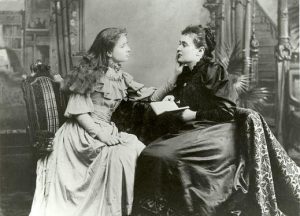
Sullivan arrived at Keller’s house on March 5, 1887. That day was considered by Keller as the most important day of his life. Sullivan immediately began to teach him to communicate by spelling words using his hands, starting with “d-o-l-l” for a doll given to Keller (Keller, 1903: 22).

At first Keller was frustrated because he did not understand that each object has a word that uniquely identifies it. In fact, when Sullivan tried to teach Keller the word for “mug,” Keller became so frustrated that he broke the mug.

But he was soon able to imitate Sullivan’s hand movements. “I didn’t know that I spell the word or even the words exist,” Keller remembers. “I just made my fingers mimic like a monkey.”

In the following month Keller’s communication continued to develop. One that made his enthusiasm for learning even greater was when he discovered how to spell “water”. With the one-handed method of sensing the movements of his teacher, while one-hand flowing with cold water, he succeeded in finding ideas about water (Rankin, 1908: 86). After that, Sullivan also taught him to know various objects in the world.

Helen Keller’s Education
Within a few months Keller had learned to feel objects and associate them with words spelled with finger signals in the palm of his hand, to read sentences by feeling the words that appeared on the cardboard, and making his own sentences by arranging words in a frame.

During 1888-1890 Keller spent the winter at the Perkins Institute to study Braille. In March 1990, Keller’s desire to learn to speak emerged. He expressed his desire to Sullivan. His teacher then took him to meet Sarah Fuller at Horace Mann School for the Deaf. Under Fuller’s guidance, Keller began to learn to speak (Fuller, 1892: 24). In addition to learning to communicate, Keller also studies regular academic subjects.

Keller was not satisfied, because he was also determined to go to college. In 1896, he attended the Cambridge School for Young Ladies, a preparatory school for women. At this preparatory school, Keller was able to use using braille stationery, and read braille books about the history of Ynani, Rome, and the United States. In addition, he can use ordinary typewriters and Braille letters. He also studied French and Latin grammar. Nevertheless, there are still many people who still doubt whether he is able to attend lectures (Schraff, 2008: 28-29).

On the other hand, his story spread quickly, reaching the ears of famous and influential people. One of them was writer Mark Twain, who was very impressed with him. They became friends (Keller, 1903: 138).

Twain then introduced him to his friend Henry H. Rogers, a Standard Oil executive. Rogers was so impressed with Keller’s talent, enthusiasm, and determination that he agreed to pay for his studies at Radcliffe College (Harvard University women’s branch).

On that campus, he was still accompanied by Sullivan, who sat by his side to interpret lectures and literary texts. When he began college, Keller had mastered several methods of communication, including reading by touch, Braille, speaking, typing, and spelling with fingers. Therefore, he also took the time to write his first book Story of My Life, published in 1903.

Keller’s lectures were fairly smooth, because he successfully completed his studies in only 4 years and graduated with cum laude predictions (Hitz, 1906: 320). This graduation made him the first tunaganda to get a bachelor’s degree.

Become a Social Activist
After graduating, Keller began to learn more about the world and how he could help improve the lives of others. Keller became a member of the Socialist Party in 1909, most likely because of his friendship with John Macy, a lecturer at Harvard and husband Anne Sullivan. During his active membership in the party, he wrote several articles on socialism, women’s rights, disability rights, and the effects of war (Giffin, 1984: 1; Nielsen, 2004: 24).

His series of essays on socialism, entitled “Out of the Dark,” illustrates his views on socialism and world affairs. It was during this time that Keller first experienced public prejudice about his disability. Previously, the press always supported him, praising his courage and intelligence. However, after he expressed his socialist views, some media criticized and linked him with disabilities. The criticism shows that the American public still makes impairment as a reason to discriminate against others who are not in line with them.

However, this criticism did not dampen Keller’s spirit of activism. Because in 1915, together with famous city planner George Kessler, he took part in the founding of Helen Keller International. This organization has a mission to fight the causes and consequences of blindness and malnutrition.

The story spread outside Massachusetts and New England. By sharing his experiences, Keller became a disabled person who influenced his time. He even spoke before the Congress and advocated for the improvement of the welfare of the blind.

When the American Foundation for the Blind was founded in 1921, Keller was made a role model and symbol in the federation. Keller himself became a member of this federation in 1924 and participated in many campaigns to raise awareness, donations and support for the blind (Nielsen, 2004: 47). In addition to this federation, he also joined the Permanent Blind War Relief Fund organization (later called the American Braille Press).

In 1946, Keller was appointed as international relations advisor to the American Foundation of Overseas Blind. Between 1946 and 1957, he traveled to 35 countries on five continents.

Keller suffered a stroke in 1961 and spent the rest of his life in his home in Connecticut. He died in his sleep on June 1, 1968, only a few weeks before his 88th birthday (Schraff, 2008: 60).

During his extraordinary life, Keller became an example of how determination, hard work, and imagination can enable one to overcome obstacles. He overcame his difficult conditions with perseverance and developed into a progressive humanitarian activist who is respected by the world.

Korean War

The Korean War was the first major conflict that occurred during the Cold War. The conflict between North and South Korea took place between June 1950 and July 27, 1953. The war known as the forgotten war claimed millions of lives. All of Korea embraced a terrible destruction and took decades to recover.

Historical Background of the Korean War

Korea is an area that is not too broad, because it only occupies 85.246 square miles of land. The Korean region is more of an archipelago, with a coastline of 5,400 miles and is heavily influenced by the sea.

Before 1945, Korea was a unity. The kingdom of ancient Korea was united by the Tang Dynasty in 668 AD. This united Korea survived for 1300 years before it finally broke.

Korea was split into two parts after maneuvers carried out by the Allies towards the end of World War II. During the war, Korea was a territory controlled by Japan. However, after Japan’s defeat in World War II, Korea was divided into two parts in the 38th parallel. The Soviets occupied North Korea, while the United States occupied the south.

After Korea was separated, the two superpower countries had invested in each other in mainland Korea. With the intensification of the World War between the Soviets and the United States, the dividing lines of North and South Korea became a new iron curtain that separated Koreans from each other. Although separated by the two parts of the region, it became a show of strength of the Soviet Union and the United States. Thus, conflicts between the two are very likely to occur.

North Korea’s leader, Kim II Sung is very ambitious to unite Korea. Therefore, he asked for the support of the Soviet Union leader, Joseph Stalin in April 1950. Stalin finally agreed to support the North Korean invasion of South Korea. He only asked Kim to ensure that the victory could be achieved and the Soviets would not intervene directly.

After obtaining Stalin’s support, Kim then visited the leader of the Chinese Communist Party, Mao Zedong in Beijing. Mao agreed that only military power could unite Korea. He also doubted the United States would pay attention to the war in Korea.

While Kim confidently told Mao that his army would rule all of Korea within three weeks, long before American intervention might occur.

The start of the Korean War

The war began on Sunday morning, June 25, 1950, after the North Korean People’s Army (NKPA) crossed the thirty-eighth parallel, supported by Soviet-made T-34 tanks. The attack was unexpected both in time and intensity.

Meanwhile, the Republic of Korea (South) forces who were not yet well-trained or had the weapons to meet the challenge withdrew. NKPA moved quickly, took over the Korean capital in Seoul, and then crossed the Han River and went west to the Kum River, then south to Taejon and Taegu. North Korea, under the auspices of the Soviet Union, wishes to make all of Korea a communist regime.

US President, Harry S. Truman, ordered US ground and air forces to evacuate residents. He also ordered the US Seventh Fleet to go to the Taiwan Strait to prevent confrontations between the Communists and Chinese Nationalists.

Within two days, the United Nations adopted a resolution proposed by the United States, which called on the troops of the People’s Democratic Republic of Korea to withdraw.

Although called upon to withdraw, the North Korean People’s Army moved further south. Truman who was worried about the power of North Korea authorized General Douglas MacArthur to send ground troops. Despite the presence of American troops, North Korean troops continue to move south.

The 24th Infantry Division, led by General William Dean, was the first to react to hampering the North Korean army. The division was then assisted by the Fifth Air Force who was transferred to Korea, although in the end it still could not stop the NKPA’s power.

In late July 1950, the United Nations took a position along the Naktong Perimeter to consolidate its forces consisting of: the First American Cavalry Division, the Second Infantry Division, the 24th Infantry Division, the 25th Infantry Division, and the First Marine Brigade, and five South Korean infantry divisions.

Immediately after the call from the United Nations, member states began sending troops and supplies. Britain was the first country to respond, placing their ships in Japanese waters under the command of the United Nations. Most countries cannot send many troops, but 17 have succeeded in giving at least financial strength to the United Nations Command.

Battle at Inchon and Yalu
On September 15, 1950, after expanding troops and building supply lines, General MacArthur began planning a plan which he had considered from the start. The operation was called Operation Chromite, which is the amphibious troop landing at the west coast port of Inchon.

As a preparation, he formed the X Corps under the command of General Edward (Ned) Almond. The force consisted of the Seventh Infantry Division (Army) and the First Marine Division. X Corps moves around the southern tip of Korea. Amphibians then landed on the morning of September 15, 1950 and within a few days had taken control of Inchon and the Kimpo Airfield. In October, Seoul was regained and returned to President Syngman Rhee.

Meanwhile, the Eighth Army under the leadership of Lieutenant General Walton H. Walker had crossed the line and moved north quickly. They cut off supply and communication lines, so NKPA was forced to withdraw. Two successes of the operation left the UN forces in thirty-eight parallels in early October. In many ways the war may have ended at this time.

However, this favorable situation was considered the right time for the United States to occupy all of Korea and restore it as a unitary state. After obtaining permission from the Joint Chiefs of Staff and the United Nations, UN and Republic of Korea troops crossed the thirty-eight parallel and moved north.

Meanwhile the Eighth Army headed to the western side of the mountains, and the X Corps which had been moved by sea to the port of Wonsan, moved to the east side. Communication between the two forces is difficult. On Thanksgiving, the 17th Infantry Regiment in the US reached the Yalu River. It was at this point that the counterattack from South Korea and its supporters began.

The joining of China in the War
The People’s Republic of China has warned that if UN troops cross the thirty-eighth parallel, they will enter the war. But General MacArthur assured President Harry S. Truman that the threat would not occur.

In mid-October 1950, there were clashes with the Chinese army. Then, on November 23, nearly 200,000 Chinese troops attacked. They passed the frozen Yalu River and gathered strength during November. The UN Command was hit hard by China, so Walker began to withdraw and evacuate troops by sea as much as possible.

To the east, X Corps also suffered defeat. Soldiers and Marines are pulled out under heavy pressure from the Chinese attack and the weather has fallen almost 40 degrees below zero Fahrenheit. When the army and marines retreated to the port of Hungnam, the navy began evacuating on Christmas Eve.

Nearly 100,000 UN and Republic of Korea troops, as well as most refugees, were evacuated. By December 25, the port had been destroyed, and most UN troops headed for Pusan ​​and other ports along the coast. Seoul was once again abandoned on January 3, 1951.

From then until the end of the war, China played a dominant role, not only in the procurement of military and civilian equipment and equipment, but also in the direction of strategy. Although the North Korean army continues to play an important role, both military authorities and civilian historians identify this Chinese attack as marking a new phase of conflict. In addition, China will also play a major role in negotiations which began in 1952.

The War on the Hills and the Long Debate Begins
General Walton Walker died in a jeep accident towards the end of December 1950. His successor, General Matthew B. Ridgway, arrived at Christmas and began the process of rebuilding the Eighth Army whose morale was destroyed after losing.

The effort was successful, Seoul was recaptured and on March 27, 1951. The Eighth Army kept moving until it reached the thirty-eighth parallel. In Operation Rugged, Ridgway’s forces established the Wyoming and Kansas Lines, which would become the main line of resistance for the entire war.

In early 1952, most of the territorial rights had been severed, and in early November 1952 the United Nations Command adopted a defensive policy and began inviting the communists to negotiate.

During this period military operations were not carried out in large numbers, but the war was focused on hills, outposts, and small bunkers. This is because the number of troops and supplies is decreasing on both sides. Soldiers and machines are limited by the scope of tasks, such as destroying a fortress, dismantling a bunker or disrupting supply lines.

The battle was confined to the hills, and the units involved were often no more than a company of troops. Success or failure at the conference table is reflected in success or failure on the ground. Peace talks continued, as the fighting in the hills was still fierce.

The United Nations and communist countries entered into negotiations with very different concepts and desires. In addition, problems arise around prisoners of war between the two parties. The negotiation process was very slow and frustrating, talks were stopped many times, and consequently reflected the political atmosphere rather than the military.

End of the Korean War: Weapons
Shortly after Joseph Stalin’s death on March 5, 1953, the communists returned to the negotiating table and agreed to exchange prisoners. Changes in the international environment were reflected in various peace proposals offered. However, the clash of weapons depends on the agreement on the exchange of prisoners of war …

Whatever affects the achievement of the final agreement is difficult to ascertain. Certainly included the death of Joseph Stalin and Soviet domestic problems. The truce was signed by General William K. Harrison and General Mark Clark for the United Nations, Marshal Peng The-huai for the Republic of China, and Marshall Kim Il Sung and General Nam Il for North Korea. The Republic of Korea did not sign the agreement.

Despite having reached the ranks of weapons, there are still large numbers of North Koreans and a much smaller number of South Koreans refusing to be repatriated. Thus creating new disputes in the future between the two Koreas.

The Korean War brought huge losses to both sides. At least 33,741 US troops were killed in military action, 2,827 were killed in war-related situations, and 103,284 injured. While the death toll for the Republic of South Korea alone reached 59,000 killed and 290,000 troops wounded, plus civilian casualties that were enough to bring the toll to almost three million people.

More casualties were on the side of North Korea and China, at least 500,000 troops were killed and one million injured.

For material losses, South Korea was the most disadvantaged. Some villages were lost to the war and Seoul, the nation’s capital, was mostly razed to the ground. Railroad lines, communications, entire state infrastructure, hydroelectric power plants, factories, civil buildings, even farms and rice fields were destroyed.