
Slavery in America began when African slaves were first brought to the North American colony in Jamestown, Virginia, in 1619, to assist in the production of profitable plants such as tobacco. Slavery was practiced throughout the American colonies in the 17th and 18th centuries, and African-American slaves helped to build the economic foundations of the new nation. The discovery of gin (cotton seed separator) cotton in 1793 established the importance of the center of slavery for the Southern economy.
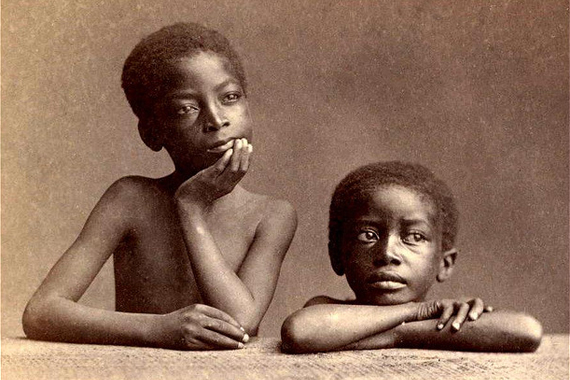
In the mid-19th century, America’s westward expansion, together with the abolition of the growing right in the North, sparked a huge debate over slavery that would trigger the American Civil War (1861-1865). Although the Union’s victory liberated 4 million nations from slavery, the legacy of slavery continued to influence American history, from the tumultuous years of Reconstruction (1865-1877) with the civil rights movement that emerged in 1960, a century after emancipation.
Background to Slavery in America
In the early 17th century, European settlers in North America turned to African slaves because it was cheaper as labor and more than poor European employees. After 1619, when a Dutch ship carrying 20 Africans in the British colony from Jamestown, Virginia, spread slavery throughout the American colonies.
Although it is not possible to give accurate figures, some historians have estimated that six to seven million slaves were imported into the New World in the 18th century.
In the 17th and 18th centuries, black slaves worked mainly on tobacco, rice and indigo plantations on the south coast. After the American Revolution (1775-1783), many Colonists (especially in the North, where slavery was relatively unimportant to the economy) began to link the black slave’s oppression to the British oppression of them, and called for the abolition of slavery.
After the war with England ended. The new US Constitution quietly recognizes the institution, counting each slave to three-fifths of the people for taxation and representation purposes in Congress. It can be seen that the US wants to form the basis for slavery by giving every right and service.
The Importance of Cotton Separator
At the end of the 18th century, with land used to grow tobacco almost exhausted, the southern Colonies faced an economic crisis, and the growth of slavery in America became increasingly dubious. Around the same time, the mechanization of the textile industry in England caused a huge demand for cotton to America, the yields of southern colonies whose production was unfortunately limited by the difficulty of separating seeds from raw cotton fiber by hand.
In 1793, a Yankee (a resident of the northeastern United States) who was a young teacher named Eli Whitney invented cotton gin, a simple mechanical device that efficiently separated seeds from cotton. the device was widely used, and in a few years, southern America could produce tobacco and cotton on a large scale. This has caused the need for slave labor to increase.
Slavery itself was never widespread in the North, although many entrepreneurs in the region grew rich with slave trade and investment in southern plantations.
Between 1774 and 1804, all northern states abolished slavery, but the so-called “special institutions” remained truly important for the South. Although the US Congress banned African slave trade in 1808, domestic trade was growing, and the slave population in the US nearly tripled in the next 50 years. In 1860 black slaves in America reached nearly 4 million, with more than half living in the cotton-producing countries of the South.
Slaves and Slave Owners
Slaves in America, which is South, are about one third of the southern population. Most slaves lived on large farms or small plantations. Slave owners tried to make their slaves entirely dependent on them, and the system that limited their lives. They are prohibited from learning to read and write, and their behavior and movements are restricted.
Many slaves were used as sexual vents. Those who behave well will get good treatment, while rebel slaves will be brutally punished. A strict hierarchy between slaves, from slaves in a mansion to slaves who became laborers in the rough.
The formation of the hierarchy also triggers them and tends to organize against their masters. Marriage between slaves has no legal basis, but their slaves are allowed to marry and raise their families.
Rebellion by slaves occurred during the enslavement system in America. One of them was carried out by Gabriel Prosser in Richmond (1800) and Danish Vesey in Charleston (1822). The most frightening rebellion occurred in August 1831, led by Nat Turner in Southampton, Virginia. At that time Turnur’s group of about 75 blacks killed around 60 white people.
These rebellions led the camps of slavery supporters to consider that the slaves were barbaric and of low ethics so that they needed slavery to discipline them.
The rebellion that occurred made the southern states of the US strengthen slavery rules by restricting education, freedom of assembly. Unlike in the northern part of the US, the suppression of slavery in the south is fueling an equal movement and abolition of slavery.
The Rise of the Abolition of Slavery
From 1830 to 1860, the abolition of slavery moved in the north of the United States. This movement was led by free black people like Fredrick Douglass and white people like William William Lloyd Garrison, founder of the radical liberation newspaper, and Harriet Beecher Stowe who published the popular novel, “Uncle Tom’s Cabin” (1852).
Meanwhile, many activists who oppose slavery believe that the sale of slaves is a sin, and those who are inclined to non-religionists claim that the sale of slaves is regressive, inefficient, and has little economic value.
The freedom of black people in the north of the US encouraged slaves from the south to flee to the north through a hiding network since the early 1780s. This network known as the Underground Railroad managed to escape the flight of about 40,000 to 100,000 slaves headed north to enjoy freedom.
Slavery Debate in America
The growth and explosion of American expansion westward in the 19th century had an impact on the development of conflict over slavery in America. In 1820 there was a bitter debate about the right of the federal government to limit slavery.
In 1850 it was negotiated on the rules regarding slavery. While all states each have their own legislation regarding slaves, there are many similar concepts that all slave states have. According to slave legislation, teaching a slave to read or write is illegal, although this often happens because children often teach each other.
Although slave legislation has many common characteristics, each state has laws or variations that are compatible with the laws of the place. For example, in Alabama, slaves were not allowed to leave their employers’ grounds without written permission, slaves were also not allowed to trade goods among themselves. In Virginia, slaves were not allowed to indulge in public places within a mile (1.6 kilometers) of their employer’s place or during meetings in public places.
In Ohio an emancipated slave was prohibited from returning to the state where he had been enslaved. In any slave state, slaves were not permitted to carry firearms.
Legislation for the District of Columbia defines a slave as “a human being, whose liberty has been taken for a lifetime, and which belongs to another.”
Civil War and Emancipation
The south reached its peak the following year, when Republican candidate Abraham Lincoln was elected president. Within three months, seven southern states had separated to form the United Confederation; four will follow after the Civil War (1861-1865) began. Despite Lincoln’s established anti-slavery outlook, the purpose of the war was not initially to abolish slavery, but to preserve the United States as a nation.
The abolition of slavery then became a goal in civil war, military needs and growing anti-slavery sentiments in the North, as well as the emancipation of African-Americans. Many black people then joined the American Union forces to fight with the southern region. Five days after the victory of the United States Government in September 1862, Lincoln issued the Emancipation Proclamation and on 1 January 1863 established the abolition of slavery in all US states.
With the enactment of anti-slavery provisions in the US. About 3 million black slaves in the areas of rebellion against the government were freed. About 186,000 black soldiers who initially helped overcome the rebellion then officially joined the US army.
The civil war that ended in 1865 resulted in 38,000 black people being killed. The total death toll is around 620,000 from the US population at that time around 35 million. This is noted as the bloodiest conflict in American history.
Post-Abandoned Periods of Slavery
In the 13th amendment to the US constitution at the end of 1865, it explicitly abolished slavery, although it was still uncertain to fully liberate post-war slavery in the south and the challenges of the Reconstruction Period (1865-1877). At the amendment to the 14th constitution, slaves will be freed and will receive citizenship rights and “equal protection” as US citizens.
Although the constitution guarantees equality of blacks in various fields of life, including American political life. Disappointment persists among black people. Supermasi whites still occur in several US states, such as the development of racist organizations such as the Ku Klux Klan which once triumphed in the south in 1877.
A century later, resistance to racism and discrimination in the United States led to civil rights equality movements in the 1960s achieving political and social benefits.
One figure in equality of rights, Martin Luther King Jr. is a very influential figure in the struggle for equal rights in the United States. He fought for racial equality which was very difficult to obtain at the time. In addition to fighting for racial equality, he is also known as the most influential black figure in the struggle for racial equality in the history of the United States.

 Heroine