Zoroastrian History

Zoroastrian Religion is an ancient Persian religion that has existed for thousands of years. This religion can be regarded as one of the oldest monotheistic beliefs in the world that still exists today.

Judging from its history, Zoroaster was the state religion of three Persian dynasties and survived until the conquest of Persian Muslims in the 7th century AD.

In the midst of the emergence of Islamic power, Zoroastrians fled from Iran by emigrating to India. Zoroaster now has around 100,000 to 200,000 worshipers worldwide, and is now practiced as a minority religion in several regions of Iran and India.
Zarathrustra Reform

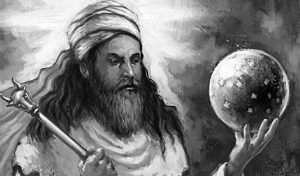
Zarathrustra was the founder or pioneer of the Zoroastrian faith. Most of what is known about him comes from Avesta – a collection of Zoroastrian religious scriptures. However it is unclear exactly when Zarathrustra lived.

Some scholars believe Zarathrustra lived during Cyrus the Great, a Persian king from the sixth century BC. Although most of the linguistic and archeological evidence shows an earlier date – sometime between 1500-1200 BC or even older.

Zarathrustra is thought to have been born in what is now northeast of Iran or southwestern Afghanistan. He probably lived in a tribe that followed an ancient religion with many gods (polytheism), a belief similar to the initial form of Hinduism.

According to Zoroastrian tradition, Zarathrustra had a divine vision of the supreme being while taking part in the purification ritual of paganism at the age of 30. He then began teaching followers to worship a single god named Ahura Mazda.

Zoroastrian Principal Teachings
God

As a reformer at a time of polytheism, Zarathustra called for the teachings of monotheism to worship a single God, the creator of all things and all of nature, both in the form of essence (spirit) and matter (maddah). Ahura Mazda is the pure, pure essence of all material forms which cannot be seen by eye’s eye and cannot be grasped by human reason.

The essence of Ahura Mazda is divided into two. First, it is transcendent (celestial) symbolized by the sun. Second, it is immanent (ardhi) which is symbolized by fire. Both are elements that emit light, illuminate the universe, are holy and are not contaminated with badness.

Based on these characteristics, followers of the Zoroastrian religion who purify and sacred fire. Although in the end made the religion shifted from monotheism to paganism. Zoroaster also changed to religion of pantheism and paganism. The fire itself eventually changes from being merely a gesture to the Creator itself.

Human

In the “Book of Advice of Zartusht” there is the concept of man. That man was originally a supernatural being and his spirit existed before his body. Both the body and the spirit are created by Ahura Mazda and the spirit is not eternal.

Man belongs to God and will return to him. While Angra Mainyu is an opponent of God.

Humans are free to choose between good and bad. Whoever chooses good and truth then he will reap the rewards of the eternal afterlife. As for those who choose evil, he too will be tormented in hell.

Ethics

The teachings of the Zoroastrian religion mostly focus on ethical issues. Its theological rationale has a core moralistic view of life.

The main and inevitable fact of life is ugliness. Good is good and bad is bad. Rejecting the existence of separate principles and ugliness is the same as connecting or linking evil to God. Therefore ugliness is certainly something that stands alone and separately.

The morality of the teachings of the Zoroastrian religion is expressed in three words namely: humate, huklit, and huvarsht which means good thoughts, good words, and good deeds. The main thing of all three is good deeds.

Dead

Followers of the Zoroastrian religion do not allow burial and burning of deceased corpses, because they assume that it will tarnish water, air, earth, and fire. Every death ceremony was led by a priest and held in the Bachram temple, the largest temple for followers of Zarahustra with its fire burning.

In the implementation of the rite of death that is by placing the body on the Dakhma or tower of silence (tower of silence). There is a clear division of places for men, women and children. The stages carried out during the ritual of death are as follows:

The corpse is kept in a room at home for three days before being brought to Dakhma, a place to carry out the ritual of death.
In the Dakhma (tower of calm) the corpse is undressed, then put to sleep on an open tower so that the corpse is eaten by crows or vows.
After the meat has been eaten by the birds, the bones are left to be thrown into the well.
Court after death
According to Zoroastrian religious teachings that every human spirit that has died will roam for three days around his body. On the fourth day, the spirit faces trial on the “bridge of vengeance”. The bridge is guarded by Lord Rashu who acts as a very fair judge in weighing the good and bad deeds of humans. If his good deeds are heavier, the spirit is allowed to go straight to heaven, but if his bad deeds are heavier or bigger then the spirit will be drawn and put into hell.

Meanwhile, if good and bad deeds are balanced then the spirit will be taken to a place called Hamestagan or a mixed place. In this place the spirits will experience improvement by feeling the pain in the form of heat and cold.

Hell in Zoroastrian religious belief is not a place of eternal torture. Hell is only temporary and is a place of purification from human taints and sins. The end of the cleansing of sins takes place at the time of judgment (reckoning) ie at the end of time.

Thus the spirit will face two trials, namely: the court at death and the general court on the Day of Judgment when the human body is raised and reunited with his spirit.

For the teachings of the Zoroastrian religion, the judgment on the Day of Resurrection is followed by the final purification of the taints and sins so that all become holy without blemishes. There is no eternal torment and all humans eventually enter heaven.

Resurrection Day / Doomsday
Zoroastrians believe the end will definitely happen. On the Day of Judgment he will be raised again from his grave to receive the results of his actions while living in the world.

Human deeds are then weighed, very few good deeds will fall from the bridge into hell. Meanwhile, those who have poor charity can cross the bridge safely to heaven. The bridge is called Civant (a concept similar to the Shirathal Mustaqim bridge in Islamic religious beliefs).

At that time all the evil spirits were destroyed by Ahura Mazda including Angra Mainyu also destroyed.

The concept of heaven according to the teachings of the Zoroastrian religion is very simple. Heaven is like a place of reunion for very large families and in it is like an ideal world life. Life in heaven is a natural refinement of life on earth. That’s where the whole family gathers in an eternal life and eternal enjoyment.

The Existence of Zoroastrian Religion in Cross History
Zoroaster became the official religion of one of the greatest empires of the ancient century, the Persian Empire. The existence of this religion can be said to be long, because it is able to survive for three dynasties before being destroyed by the presence of Islam.

Cyrus the Great, founder of the Achaemenid Persian Empire, was a devout Zoroaster. According to most records, he was a tolerant ruler. This is evidenced through a policy that allows non-Iranian people to practice their own religion. In addition he ruled using the Zoroastrian Asha (truth and truth) law, but did not impose Zoroastrianism on people from his territory conquered by Persia.

Zoroastrian concepts, including the idea of ​​a god, heaven, hell, and judgment day, were probably first introduced to the Jewish community in Babylon, where people from the Judean Kingdom had lived in detention for decades.

When Cyrus conquered Babylon in 539 BC, he freed the Babylonian Jews. Many returned to Jerusalem, where their descendants helped create the Hebrew Bible.

The Persian Muslim conquest between 633 and 651 AD led to the fall of the Sassanian Persian Empire and the decline of Zoroastrian religion in Iran. Over time, most of Zoroastrian followers of Iran converted to Islam.

Meanwhile, some Zoroastrians fled from Islam to India. These people are known as Persia.

Experts speculate that the group sailed across the Arabian Sea and landed in Gujarat, a country in western India, between 785 and 936 AD.

Now Persians become ethnic minorities in India and Pakistan. There are currently around 60,000 Parsees in India and 1,400 in Pakistan.
Bangladeshi History

Bangladesh is one of the largest Muslim countries located in South Asia. Before independence this country had a winding journey. Starting from becoming one with India under the British colonial government, to become part of the State of Pakistan. Although as one of the largest Muslim countries, this country has never been free from disasters and conflicts, so that poverty is inevitable.

Geographical Location of Bangladesh

The People’s Republic of Bangladesh is a small country with an area of ​​144,000 square kilometers, an area that is slightly smaller than the state of Wisconsin. The country is located on the Bay of Bengal and is only bordered by two countries, India and Myanmar.

Incredibly, nearly 150 million people – half of the population of the United States, or about five times more people living throughout Canada – live in this small region. This condition creates the highest population density in the world, 2,600 people per square mile.

The Bangladeshi government realizes that its population is too high and has worked to resolve this situation. With a natural population increase of 2 percent per year, the situation is much better than in the past. Three decades ago, birth rates were almost twice as high. In 1970, the average woman would give birth to about six children; now, that number has dropped to three.

Bangladesh is also an Islamic country, with the fourth largest Muslim population in the world. Islam was brought to the country by Turks from Central Asia in the 13th century. Since its introduction several centuries ago, Islam has continued to develop. To date, 83 percent of the population is Muslim. While Hindus make up 16 percent of the population.

Bangladesh’s natural conditions are not very friendly to the locals. Especially if the monsoon that brings rain arrives, Bangladeshis are very prone to flooding. The condition is worsened because most farmers and others live in lowlands that are vulnerable to flooding, so the impact of the monsoon can be very devastating.

The United Nations Environment Program (UNEP) estimates that 80 million Bangladeshis are in danger due to flooding. If the earth’s climate continues to warm and sea levels rise, the country’s vulnerability to flooding will be far worse.

Cyclones are another natural hazard that can have an impact on Bangladeshi land and people. Tropical cyclones form at the southern end of the Bay of Bengal during the summer and then move north towards the coast of Bangladesh. This cyclone causes frequent floods and tidal waves that affect the lowlands.

Human habitat also poses a number of threats to the nation’s environment. Among these are water pollution, deforestation, lack of water (during the dry season), land degradation, and a number of additional problems caused by overpopulation and poverty.

Bangladesh in the Colonial Period
At the beginning of the 20th century, the Bengal region was one of the South Asian regions included in British colonization. Bengal in 1905 was divided into two regions; West and East Bengal (present-day Bangladesh).

West Bengal which has its capital in Calcutta is more dominated by Hindus. Meanwhile, East Bengal, which is in Dhaka, is more Muslim-dominated.

However, in 1912, Britain reunited the area of ​​Bengal due to the insistence of the Hindus. Conflict was inevitable and increasingly peaked when Muslim areas in India asked to be separated from India and become an independent country. The idea received strong support from the Indian Muslim League.

While Indian Muslims began to convey the idea of ​​territorial separation, Hindus remained determined to unite. Mahatma Gandhi had tried to ease the tension between the two groups, but due to differences that were too steep the effort failed.

Finally, the British government issued the Indian Independence Act on July 14, 1947. The law separated the Indian colonial territories into two independent territories namely India and Pakistan.

Pakistan became independent on August 14, 1947, and India became independent on August 15, 1947. Chaos was inevitable.

After independence, fear for the future soon haunted the millions of Hindus who had moved to lands now separated from India. On the other hand, millions of Muslims fled their homes in India to seek security in the land of the new state of Pakistan.

Violence, riots, persecution, genocide and kidnappings occurred immediately after independence for the two new countries. An estimated 12 to 14 million people fled Pakistan or India, and more than half a million died.

Join Pakistan and fight for independence
After Pakistan gained its independence, the East Bengal region was referred to as East Pakistan. Pakistan is a country divided into two parts on opposite sides of the Indian continent. The two parts are 1,000 miles (1,600 kilometers) apart.

The nation’s capital is in Karachi and about 90 percent of the country’s wealth is concentrated in West Pakistan. Meanwhile, 90 percent of the country’s population lives in East Pakistan, which is relatively poor and powerless.

Political and economic decisions made by Muhammad Ali Jinnah’s government naturally favor West Pakistan.

Between the two there are also quite prominent cultural differences. One of the most prominent differences is the language used in each region. Urdu is suggested by West Pakistan to be the national language and Bengali, which is the dominant language of East Pakistan, becomes the second language.

Problems also arise, because most people in East Pakistan cannot understand Urdu. They were very angry over the political decision made by the government to adopt Urdu as the official language of the country.

In 1952, student demonstrations in East Pakistan ended violently when police killed two protesters. Two years later, East Pakistan succeeded in pressuring the Karachi government to recognize Bengali and Urdu as the official languages ​​of the country.

However, the seeds of separation between East and West Pakistan are firmly planted because of language problems.

The Muslim League became a political party after Pakistan secured its independence. However, in the 1954 election, East Pakistan rejected the Muslim League and chose to support local parties such as the Peasant and Workers Socialist Party, and the Awami League (People’s League). These parties then formed a coalition that worked together to oppose the dominance of West Pakistan.

A new issue that is increasingly heating up the separation of East and West Pakistan arises, after foreign aid sent to the country was mostly given to West Pakistan and very little to East Pakistan.

In 1966, the Awami League leader, Sheikh Mujibur Rahman (commonly called Mujib), issued a six-point political and economic program for East Pakistan. The main idea in the agenda is to increase East Pakistan’s autonomy.

Meanwhile, President Mohammad Ayub Khan of Pakistan responded by pushing the country in the opposite direction, towards the integration of East and West Pakistan. Mujib was captured by the government in 1968.

As a result, violence, strikes and demonstrations continue. In 1969, Ayub resigned and General Agha Mohammad Yahya Khan took over control of the Pakistani government. He implemented martial law to quell chaos and violence.

The event changed unexpectedly on November 12, 1970, when a devastating typhoon struck East Pakistan. A quarter of a million people die. Two days after the typhoon, General Yahya came from Karachi to see the situation. He seemed indifferent to the problem, making the people of East Pakistan even more angry.

The political divide was evident in the December 1970 elections and West Pakistan began to move more troops to the East. At this time the political, economic and social rift between East and West has reached its peak.

General Yahya has decided to subdue East Pakistan with military use. The crackdown on military use began on March 25, 1971.

The next day on March 26, 1971, Bangladesh announced its independence from a radio station confiscated in Chittagong.

The Pakistani military continues to force East Pakistan to submit to the authority of Pakistan’s central government. In fact they have prepared a list of East Pakistan leaders who must be eliminated. Hundreds of people died on the first night of heavy fighting.

On the other hand, the local people of East Pakistan recognize this as the beginning of the war for liberation. The war took many casualties in East Pakistan. Not only are the land, infrastructure, and nature damaged or destroyed, but also an estimated one million people died in nine months of fighting.

As a result of the war, eight to ten million refugees flooded India from East Pakistan. This prompted the Indian Parliament to act, condemn the Pakistani military and provide support to the rebels in Bangladesh.

The Indian army then began to invade East Pakistan on 4 December 1971 and took control of the city of Dhaka. In just 12 days the Indian Army with the help of Bangladeshi freedom fighters succeeded in repelling Pakistani troops in Bangladesh.

The Bangladesh Constitution was adopted on November 4, 1972. This constitution modeled on the Indian Constitution and created a form of parliamentary government. Mujib became the first prime minister and Dhaka became the capital of a fragile new nation.

Bangladesh Post-Independence Turmoil
After the war, Bangladesh was in a mess. Cities were destroyed, the economy was destroyed, and the population was hit by chaos due to death, rape, starvation and pillage.

The new government faces the daunting task of regaining civil authority and creating law and order. The great famine of 1974 made this situation even more urgent. The government estimates 26,000 people have died, while several international sources claim the number is approaching 1 million

In his efforts to solve the country’s problems and the existing resistance to his government, Prime Minister Mujib adopted a more repressive policy.

Political parties were stopped, the media were suppressed, and personal freedom was severely restricted. He created a one-party state with himself as the ruler.

This unpopular policy finally led to efforts to bring down his government. In a coup led by young military officers, Mujib and many of his families were killed on August 15, 1975. This coup led to a period of military rule which lasted for 15 years until 1990.

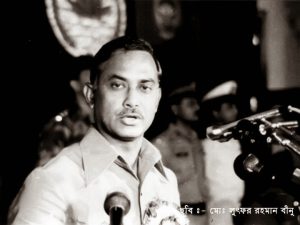
Major General Ziaur Rahman served as the leader of Bangladesh from 1975 to 1981. His leadership focused on restoring law and order to a chaotic country. He also tried to form a political party and hold a general election, however there were many attempts to kill him. The last attempt was successful. In May 1981, Rahman was killed in Chittagong in a coup led by Major General Manzur Ahmed.

After a while the vice president led the country, Hussain Mohammed Ershad seized power in 1982. He assumed full control and declared martial law.

Ershad’s government was hated by many Bangladeshis, because the previous government had been elected with reforms set by Rahman. In contrast, Ershad was a true military dictator.

During his reign, he made Islam the state religion and struggled to democratize the country. His rule ended when the army withdrew support from him and supported democratization. With the people and the military opposing him, Ershad resigned in December 1990

In early 1991, free elections were held and Khaleda Zia was chosen by Parliament to become prime minister. Zia is Ziaur Rahman’s wife and remains very popular in this country. He served until 1996 and instituted a number of reforms in the field of education and made the country more democratic.

After his term ended, the Zia opposition, led by Sheikh Hasina Wajed, took over the government. From 1996 to 2001, Hasina served as prime minister and worked to continue the process of good governance in the country. One contribution is the improvement of health services. Zia returned as prime minister in 2001.

Bangladesh’s political history can be said to have been colored with turmoil, military repression and regulation by distant authorities which have left scars in the country, but the roots of democracy are growing deeper each year. Until now the spirit of human independence and the search for freedom continue to live in the midst of difficult situations.

Bangladesh Economic Development
The economy of Bangladesh is characterized by extreme poverty and is overwhelmed by the political upheavals that often occur in the country. After independence from Britain, an estimated 20 million people were displaced, with Muslims moving from India and flooding into Bangladesh. This migration caused the country to lack housing, medical support and food.

But this problem is only the beginning of the country’s economic problems. Floods, cyclones and tsunamis use up Bangladesh’s economic resources. Repeated crop failures result in frequent starvation that afflicts millions of people. Political corruption and political strife undermine the government’s ability to fulfill its potential in carrying out development

Rapid population growth often exceeds annual economic benefits. The high population density in the country removes potentially productive land from agricultural use. Environmental pollution is also a big problem and requires expensive costs to solve. Inadequate power, even the country became one of the countries with the lowest energy use per capita in the world

Just like other developing countries, agriculture is the main occupation of the majority of the population of Bangladesh. Nearly two-thirds of the workforce is involved in agriculture. However, agriculture only provides one fifth of the country’s gross domestic product (GDP).

Agriculture in Bangladesh is a very challenging job. Most farmers work on a very small plot of land.

Very few machines are used, because of expensive equipment and cheap human labor. Adding a processing machine will drastically increase unemployment. Thus, efforts to increase production by using more tractors and other engines are not the desired solution for the country’s economic struggle.

Fortunately, Bangladesh is blessed with fertile soil. Rice is very important as the main food for Bangladeshis. Grains like wheat are also an important part of food. Other main crops include hemp (fiber), tea, and tobacco.

Bangladesh is known as the world’s leading jute producer, which is used to make yarn that can be woven into cloth, sacks, carpets, mats, ropes, and many other products.

In addition to agriculture, industry has become a major contributor to the wheels of the economy. Over the past few decades, manufacturing has shown considerable growth in Bangladesh, because labor is very cheap.

Low labor costs lured many foreign producers to the country. A number of U.S. companies employ low-skilled populations in Bangladesh and elsewhere in south and east Asia.

Bangladesh is also connected to the global economy through trade. In fact, the only way developed countries can progress economically is by accepting and participating in the globalization process. Because of low labor costs, Bangladesh can produce manufactured goods more cheaply than in countries where labor is more expensive.

The main export commodities of Bangladesh are clothing, hemp, leather and seafood. While they are importing some goods which include machinery and equipment, chemicals, iron and steel, textiles, food ingredients, petroleum products, and cement. Unfortunately, this country still imports more than exports and this trade deficit adds to the country’s debt and poverty.

Forty-one percent of the country’s products are marketed to other countries. Bangladesh’s main export markets are developed countries like the United States (24.2 percent), Germany (13.2 percent), Britain (10.6 percent), France (6 percent), and Italy (4 percent).

While the import market came from China (18.7 percent), India (14.7 percent), Kuwait (8 percent), Singapore (6 percent), and Japan (4.4 percent).

History of Democracy

Democracy is derived from the Greek “democracy” which means people’s government. Popular government is a government in which everyone has a voice about what needs to be done. The history of democracy itself is believed to have its roots in ancient Greece around two and a half millennia ago (around the sixth century BC).

Birth of Democracy
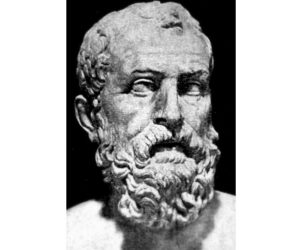
In Greece, Athens MP named Solon (around 630-560 BC) presented an early version of participatory democracy, which was mixed with elements of social justice.

It aims to correct government control that is exclusive and oppressive (oppressive). This desire arose because at that time wealthy landowners used their influence to exploit a severe economic crisis. They seized the wealth and freedom of the poor population.

Solon who was elected as chief judge in 594 BC then began to oppose the rulers. Reforms aimed at repairing flawed systems are carried out by limiting the absolute power of the upper classes.

In practice Solon limited the influence of the rich and introduced a more humane and balanced legal code. He also increased the role of the People’s Assembly by creating Boule (multi-ethnic council of middle-income citizens), then limiting the authority of the Best Male aristocratic Council (Areopagus).

In 510 BC, Cleisthenes (around 570–507 BC) continued Solon’s constitutional reorganization. He made the People’s Assembly the only legislative body, increased the influence of Boule, seized the effective power of Areopagus, and ensured wide and deep participation in public life.

In Athens, the government allowed all free adult men who were citizens to vote, whether rich or poor. Unfortunately the system has flaws because it does not accommodate women’s rights in politics.

When democracy began to function in Athens, many other city states chose to implement the system in their government. But the opportunity to vote is less than that imposed in Athens.

Most other city-states only allow adult male citizens to choose if they own land or own their own home (ie, rich people). They also don’t let women choose.

One big problem for democracy in ancient times was the lack of time for men to always go to the meeting place to vote.

Most men have jobs, grow rice, make shoes, fight or whatever. They cannot always argue and choose. Therefore, finally some people were chosen who would carry out most of the voting (representative model) and the rest only came when there was a very important vote.

In Athens, people who are representatives of the people are chosen by lottery. The man who wins in the lottery has the right to sit on the Council of 500. Then he will serve for a year on the council.

Development of Democracy
Starting from Ancient Greece, then democracy spread to the region around the Mediterranean. However, democracy in this region was almost destroyed by the Roman Empire around 100 BC.

On the other hand, places like Athens continued to use democratic methods to make their own decisions on local matters for a long time after that.

A thousand years later, in the Middle Ages, several cities in Italy – Siena, Florence, Genoa, Pisa, Venice – returned to democratic rule after Matilda of Canossa died. These democracies are all organized in slightly different ways, but none of them allows the poor, women, or children to vote, and some have a lottery system like Athens.

Farther north in England, some men had the right to elect local officials and their representatives in Parliament in the Middle Ages, but the king still held most of the power.

This Italian democracy, too, was finally conquered by the Holy Roman Empire and ruled by the German emperor.

Starting in the 1600s, people began to struggle to realize democracy again. In England, Cromwell seized power to form Parliament. In America, the Revolutionary War gave birth to the Constitution in 1789. The constitution allowed adults to choose freely if they owned their own agriculture or business.

A few years later, the French Revolution brought democracy to France (for a short time). In the early 1900s, democracy entered Spain – for a while. Even though countries that embraced democracy began to emerge, women’s right to vote was still severely restricted.

Today many countries embrace a form of democracy. In the 20th century. most poor people, people of color, and women have won the right to vote, even though children and foreigners still cannot.

Even though countries that embrace democracy have mushroomed, the amount of power available to voters still varies from country to country and some Middle Eastern countries such as Saudi Arabia still have not implemented this system.

History of the Great Wall of China

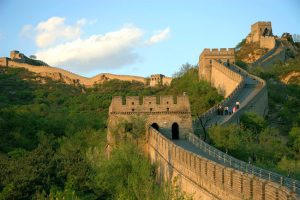
The Great Wall of China is a series of ancient walls and fortresses located in northern China. This wall has a length of 21,196.18 kilometers.

The Great Wall of China is China’s best-known symbol and has a long history. Initially the wall was built by Emperor Qin Shi Huang in the third century BC. as a means to prevent attacks from the Xiongnu and other nomadic tribes.

For more than 2,000 years the construction of the wall was continued by the Chinese authorities. The most famous and preserved part of the Great Wall was built in the 14th to 17th centuries, during the Ming dynasty. Although the Great Wall has never effectively prevented the invaders from entering China, it serves as a tangible symbol of Chinese civilization that has existed for a long time.

Qin Shi Huang and the Beginning of the Construction of the Great Wall of China

The construction of the Great Wall of China can be traced to the 3rd century BC, but many fortifications including the inside of the wall have been built hundreds of years before. The fortresses were built when China was divided into several warring kingdoms.

Around 221 BC, Qin Shi Huang, the first emperor to unite China under the Qin Dynasty, ordered the removal of defense posts between countries and united a number of walls along the northern border into one defense system. The wall was then extended by more than one 10,000 li (li is about one third of a mile). The aim of this project is to protect China from the attack of nomadic tribes in the north.

The construction of the Great Wall of China became one of the most ambitious development projects ever undertaken by any civilization. The famous Chinese general Meng Tian was in charge of the project.

According to some accounts it is said that the construction of the Great Wall of China used troops, prisoners, and commoners as workers.

Most of the Great Wall of China is made of earth and stone. The wall stretches from the port of the Shanhaiguan Chinese Sea more than 3,000 miles west to Gansu province. In some strategic areas, parts of the wall are overlapped for maximum security.

The wall has a foundation as high as 15 to 50 feet, then a height of about 15-30 feet and topped with a fort as high as 12 feet or higher. The building also features a guard tower that is placed along the wall interval.

When Emperor Qin Shi Huang ordered the construction of the Great Wall around 221 BC, the workforce that built the wall consisted mainly of soldiers and prisoners. It is said that as many as 400,000 people died during the construction of the wall. Many of these workers were buried in the walls themselves.

The Great Wall of China in Cross History
With the death of Qin Shi Huang and the fall of the Qin Dynasty, many parts of the Great Wall were damaged. After the next dynasty, the Han Dynasty also collapsed, a series of border tribes controlling northern China.

Among the most powerful of the tribes was the Northern Wei Dynasty. When in power this dynasty repaired and expanded the existing wall to defend against attacks from other tribes.

Bei Qi Kingdom (550-577) built or repaired walls of more than 900 miles. Repair and expansion were then continued by the short-lived Sui Dynasty (581–618).

With the fall of Sui and the rise of the Tang Dynasty, the Great Wall lost its function as a fortress, because China had defeated the Tujue tribe in the north and expanded its territory beyond the original border protected by the wall.

During the Song Dynasty, the Chinese were forced to retreat under threat from the Liao and Jin people in the north who took over many areas on both sides of the Great Wall. The powerful Yuan (Mongol) dynasty (1206-1368), founded by Genghis Khan, eventually controlled all of China, parts of Asia and parts of Europe.

Although the Great Wall was not so important to the Mongols in particular as a military stronghold, the soldiers were still assigned to the wall to protect merchants and caravans traveling along the Silk Road trade routes.

Construction of the Ming Dynasty Wall
Despite its long history, the Great Wall of China as it is today is mostly built during the Ming Dynasty (1368-1644).

Like the Mongols, the early Ming rulers were less interested in building border fortifications, and building limited walls until the end of the 15th century.

In 1421, emperor Ming Yongle proclaimed China’s new capital, Beijing, at the site of the former Mongol city of Dadu. Under the cold rulers of the Ming rulers, Chinese culture flourished, and the period saw a large amount of construction alongside the Great Wall, including bridges, temples and pagodas.

The construction of the Great Wall as it is known today began around 1474. After the initial phase of regional expansion, the Ming rulers largely took a defensive stance and the expansion of the Great Wall was the key to this strategy.

The Great Wall of China in Modern Times
In the mid-17th century, Manchus from central and southern Manchuria broke through the Great Wall and entered Beijing. In the end they forced the Ming Dynasty to abdicate, while also marking the beginning of the Qing Dynasty.

Between the 18th and 20th centuries, the Great Wall emerged as China’s most common symbol for the Western world, and both physical symbols – as manifestations of Chinese power – and psychological representations of barriers maintained by the Chinese state to repel foreign influence and exert control over its citizens.

Today, the Great Wall is generally recognized as one of the most impressive architectural achievements in human history. There was an effort to maintain the structure of the wall, but a more concrete step was only realized in 1980, when China made the wall a tourist attraction and source of income.

In 1987, UNESCO established the Great Wall as a World Heritage Site, and popular claims that emerged in the 20th century stated that this wall was the only man-made structure seen from space.

History of India

Ancient Indian Civilization is a civilization located along the Indus River. Where is centered in the City of Mohenjodaro and Harappa. Ancient Indian civilization is estimated to have existed around 2500 BC. At that time the City of Mohenjodaro and Harappa were neatly arranged. The inhabitants of this civilization are the Dravidians. The Dravidian possessed the characteristics of a short body, pug nose, black curly hair and black skin. Where the Dravidian people have built sewers equipped with sanitation channels. Reported by Encyclopaedia Britannica (2015), Indian civilization is also called the Indus valley civilization or Harappan civilization. The civilization is estimated to have existed around 2500-1700 BC. The Indus civilization is known to consist of two major cities, Mohenjodaro and Harappa, and more than 100 villages. The two cities were originally each about 1 mile or 1.6 square kilometers.

City planning In the book of Ancient India (2008) by Maryani, at that time the City of Mohenjodaro developed into a city like Mesopotamia, Ancient Egypt and Greece. Mohanjodaro means dead mounds. Mohanjodaro is located in Sindh Province, precisely above the Pleistocene area and in the middle of the Indus River plain. At that time the Indus River Plain was a prominent and prominent area of ​​the Indus River valley civilization. In the past Mohenjodaro was one of the administrative centers of the Indus River Valley civilization. It is also one of the fastest growing cities in South Asia. Planning and technical skills show the interests of the city for the population. There has a stunning construction of buildings and consider works of art. The building has a layout based on the lane in a perfect pattern. Public facility buildings also represent high-level social organizations. The city of Mohenjodaro was built with regular city planning. Also read: Up to a Century of Human Civilizations Where to meet health and beauty requirements.

The division of the city is carried out into square or rectangular blocks. There houses were built on the edge of the highway and the door to the house faced the street. Roads are built in an orderly and straight way. The road is 10 meters wide and made like a sidewalk. There is a water channel that flows under the road and goes straight to the river. The rooms of the resident’s house have wide windows so that the air circulation is smooth. Sewage from the bathroom and latrine is connected directly to the public sewer network. Agricultural and economic systems Civilizations live by agriculture, coupled with considerable trade. Field wheat and peas, sesame seeds, and some dates stones have also been found, as well as some of the earliest known cotton traces.

Indus civilization seems to have evolved from neighboring villages using the Mesopotamian irrigation agriculture model. With sufficient community skills to reap the benefits of the vast and fertile Indus River valley. The function of the river is as a means of transportation, trade and irrigation. Also read: Inheritance of a Masterpiece of Thought of Civilization in the Middle of Corona Pagebluk Trade activity is not only in the Indus river valley but extends outside the region in connection with trade and shipping in the West Asian region. It was based on the discovery of clay stamps that used the writing of the picture turned out to be the same as similar objects found in Mesopotamia. They are also able to control the floods that occur every year. After gaining a secure foothold in the plains and mastering the more pressing problems of a new civilization, with a population that is well nourished and growing. Community life Quoted by the Ministry of Education and Culture (Kemendikbud) site, it is actually rather difficult to parse regarding the life of the Indus River valley community.

However, based on the relics of the ruins of the buildings of the City of Mohenjodaro and Harappa, it reflects a modern urban layout and has an orderly, developed and prosperous government. There were also found fortress walls which contained warehouse buildings, meeting halls and public baths. Most likely the place is the center of government. In the warehouse building serves as storage of crops. Public baths are used for bathing officials. While the meeting ward functions clearly for meetings of the authorities and government officials to plan and regulate the course of the government. Also read: 25 Years of Search, Mayan Civilization Found in Southern Mexico The Beliefs of the Indus River Valley The beliefs of the people in the Indus River valley worship the gods (polyhteism).

History Google Search And Yahoo

For all internet surfers, who doesn’t know Google? if there is possible just focus on opening a particular website and not trying to find information from various web. Google is the most famous search engine on the internet besides other search engines like altavista.com, yahoo, etc.

The word Google appears due to typos in the domain registration that was originally the word Googol coined by Milton Sirotta, a US Mathematics expert in mentioning the number 1 with 100 digits 0 (zero) behind it or it could be with the term 10 rank 100 which is intended to show that in Google has a lot of information that is almost “innumerable”.

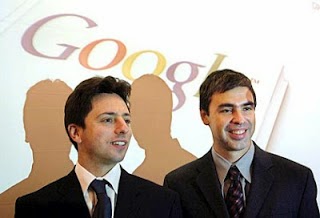
Google was also born from a unique story of an accidental meeting between two people who were interested in the IT world. the two people are Larry Page Alumnus Univ. Michigan is 24 years old and Sergey Brain is 23 years old. they were still Masters students at Stanford University. The two met on a trip to enjoy a weekend vacation, at which time Sergey Brain accompanied Larry on a tour. On the way, the two of them discussed with each other the issue of how to recover data from massive data sets.

In January 1996, Larry and Sergey began collaborating in the creation of a search engine called the BackRub Project because it has a system that checks backlinks to estimate the significance of a site. At that time a small Search Engine named Rankdex was also conducting a similar investigation.

However, due to a setback, they both intended to sell the backrub project, but were refused. Because it cannot be sold, they want a new name for their machine. Initially they wanted the name Googol for its new search engine. A year later their unique approach to network analysis raised the reputation of BackRub / Googol. When they will buy a domain, it turns out there was an error in typing and turned into Google. Finally their search engine was used by Stanford University on google.stanford.edu.

Larry and Sergey continued to perfect Google technology throughout early 1998. Both also began to look for investors to develop Google’s technological sophistication. Tit for tat. They got an injection of funds from campus friend Andy Bechtolsheim, who is the founder of Sun Microsystems. Their meeting took place early in the morning on the porch of the Stanford faculty student dormitory, in Palo Alto. Larry and Sergey gave a short demo because Andy did not have enough time.

Through the demo, Andy agreed to provide financial assistance in the form of a check worth 100 thousand US dollars. Unfortunately, the check was written in the name of the Google company. Yet at that time a company called Google had not yet been founded by Sergey and Larry. Andy’s investment is a dilemma. Larry and Sergey would not be able to present checks as long as there is no legal institution called the Google company. Therefore, the two founders of Google are back to work hard in finding investments.

They looked for donors from family, friends, and colleagues until finally collected funds of about 1 million dollars (On September 4, 1998, Google which at that time was still based in the garage owned by a friend Larry Page and Sergey Grin had reached an investment of up to $ 1.1 million). And finally, the Google company was founded on Sept. 7, 1998 and was officially opened in Menlo Park, California.

Google’s mission is, “to gather world information and make it universally accessible and useful.” Google’s philosophy includes slogans such as “Don`t be evil”, and “Work should be challenging and challenges should be fun”, illustrating the relaxed corporate culture.

Google only moved offices in March 1999 to Palo Alto. Since that time Google has continued to grow and continue to get a lot of visits to its search engine because of its simple design and good search results.

In 2000 Google finally began to open channels of advertising based on keywords, namely Google Adwords. On September 4, 2001 Google also patented a system of ranking search results that is currently popularly called PageRank. Google’s success continues to skyrocket with more and more innovations and services that benefit internet users. It had made many other internet giants like Yahoo, even Microsoft became worried.

Even today Google continues to innovate by launching various new products such as Google Flip and is always updating and developing old products such as Picasa and Google Chrome. Even Google is also diligent in perfecting and completing various features of its products such as Google Translate, whose widgets can now be installed on all pages of the site.

Google is currently the number one company ranked in the top 100 most popular companies in America, with a number of employees around 10 thousand people.

Yahoo! is a popular web portal operated by a company called Yahoo! Inc …
Yahoo! initially just a kind of bookmark, the idea began in April 1994, when two Stanford University alumni were on vacation when their professor went out of town because of a large leave.

Engineering students David Filo and Jerry Yang have little work to do besides surfing the internet. They don’t take long to compile a large list of bookmarks, grouped by subject.

Then they think, why not put it on the web? They then work to create a database program to handle it, which can provide results online.

In March 1995, Yahoo entered into a business partnership with the owners of the Silicon Valley Venture capital. Then, they formed a partnership with Sequa Capital, a company that has a reputation in the field of investment including Apple Computers, Atari, Oracle, and Cisco Systems.

They agreed to fund Yahoo with an initial investment of close to $ 2 million. Because the realization of their new company had rapid potential growth, Jerry Yang and David began building a management team. They recruited a Motorola veteran and Stanford Engineering alumni named Tim Koogle as chief executive officer and Jeffry Mallet, Founder of Novell’s Consumer Division of Consumer as chief operating officer.

They managed to save the second round of funding in 1995 from Reuters Ltd. investors. and Softbank.

Yahoo! very successfully launched publicly in April 1996 with a total of 49 employees.

Currently, Yahoo! Inc. has become a leader in global communication via the internet, commercial, and media companies that have become a network service brand of more than 232 million individuals every month in cyberspace. As the first online navigation that guides the web, http://www.yahoo.com is the leader in the context of traffic, advertising, household needs, and business user reach.

Yahoo! is the first global internet brand to reach the biggest audience in cyberspace. The company also builds an online business with a service company that designs productivity and the web for its clients.

Designing services are included in the collaboration. Yahoo !, a customization solution for the company; audio and video streaming; shop hosting and management; and website services and equipment.

A network of global web companies is included in 25 world properties.
With headquarters in Sunnyvale, California, Yahoo! also has offices in Europe, Asia, Latin America, Australia, Canada and the United States.

History George Floyd

A black man looked in pain when his body was crushed by the police. The man named George Floyd tried to catch his breath but the more he resisted, the greater the pressure felt.

Shortly after being rescued, George just breathed his last. The BBC reports his life was helpless even though he was rushed to hospital. Public outrage culminated in this incident.

Minneapolis is again witnessing how racism continues to undermine America.

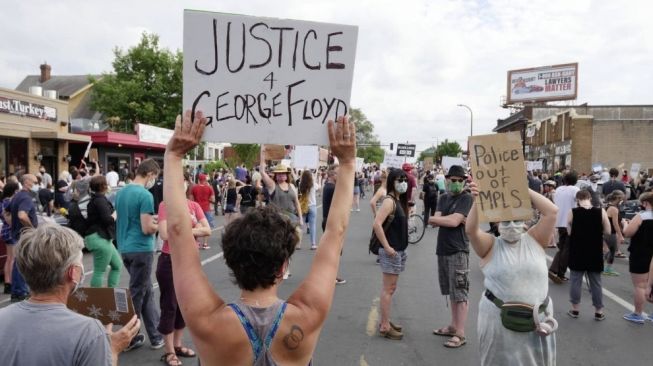
Demonstrations over the death of George Floyd could not be dammed, the crowd huddled in front of the White House and began locking up government offices, where President Trump led his country. They demand justice for Floyd’s death.

This case is not as simple as another murder case. Insulated Floyd’s breath is a vivid portrait of how the black race stood in the shadow of fear.

Keisha N. Blain, an associate professor of history at the University of Pittsburgh wrote in the Washington Post that the violence against Floyd was only two months after the death of a black woman named Breonna Taylor.

Keisha revealed that the threat of black people in Minneapolis was not a pandemic virus, but police violence.

Based on history, violence like this has happened for centuries in America. For a long time, black people were only considered slaves and their rights were limited by white people who felt confident, their position was higher than black people.

Long before George Floyd was born, around the 20th century, capital punishment did not appear as a new tactic for controlling the lives of black people.

Anti-lynching fighter, Ida B. Wells-Barnett revealed in ‘The Red Record’ that the lynching of American blacks was not only planned beforehand but was also fully supported by the local police.

During the summer of 1919, massive racial violence erupted in America. In Chicago, Eugene Williams, a black teenager was killed on July 27, 1919 for swimming in a special section of ‘white’ Lake Michigan.

Just like anger after Floyd’s death, the crowd was also furious when William was killed.

The demonstration continued for about a month and ended in August 1919 with the deaths of 15 white people, 23 black people and at least 500 people injured. This number does not include thousands of black families who lost their homes.

Continuing Keisha’s writing, the police assault on black activists during the 1963 Birmingham campaign and the 1965 Selma-to-Montgomery march were the racist roots of the American police. The violence targets black men, women and children.

Sprinting away in 2009, for the first time America had a black president. He is Barrack Hussein Obama, who was installed on January 20. Of course this is a breath of fresh air for black citizens.

Unfortunately, even though Obama has many achievements in the field of government, he is still called the root of the increasing racial problems that have occurred throughout his administration.

Back to the murder of George Floyd, if Marthin Luther King Jr. was still alive, maybe he would stare blankly at the phenomenal speech paper ‘I Have Dream’. Will justice for black people forever be a dream?

History Gif

Graphics Interchange Format (GIF) is a format that is often used in the web world and in the world of digital imagery. This GIF allows users to create simple animations that will make repeated movements so that it looks unique.

GIF which is now widely spread on various websites and applications shows short animations that make repetitive movements. But initially, GIF is a way to display photos.

The history of GIF began when Steve Wilhite started working on GIF in early 1986. At that time, he was a programmer for Compuserve – an online service that allows users to access chat rooms, forums and information such as stock prices.

Sandy Trevor, Wilhite’s supervisor at Compuserve, told WIRED that he wanted to solve two problems. First Compuserve requires a graphic format that works on all computers.

At that time the PC market was divided into several companies including Apple, Atari, Commodore, IBM and Tandy, each of which had its own way of displaying graphics.

Compuserve had used other graphic formats in that era, such as NAPLPS, but Trevor considered it too complicated to apply. As a result he commissioned Wilhite to create a simple format that could work on any machine.

The second wish, Trevor wants Wilhite to create technology that can quickly display sharp images even on slow connections.

“In the 80s, 1200 baud was high-speed. Many people only have 300 baud modems, “Trevor said.

The average broadband connection in the United States is 40,000 times faster than a fast 1200 baud connection, so Compuserve requires very small files.

Another major web image format, JPEG, was being developed at the time. However, the format is more suitable for photos and other images that contain high amounts of detail and will not experience slight distortion.

Meanwhile, Compuserve requires a format to display stock prices, weather maps and other charts. As a result Wilhite decided to base GIF on a lossless compression protocol called Lempel-Ziv-Welch, or LZW.

Wilhite completed the first version of GIF in May 1987, and Compuserve began using the format the following month. This was recorded two years before Sir Tim Berners Lee announced his World Wide Web project and six years before the Mosiac browser made the web accessible to users, to make GIF as it is today.

GIF is fairly perfect for displaying logos, line art, and website diagrams like Wilhite’s first developed format. Because GIF images are transparent, it allows website designers to make more complex layouts.

Wilhite himself has the foresight to make his GIF expandable so that other developers are able to add other types of information to the GIF. This allowed the team at the Netscape browser to create an animated GIF standard in 1995.

“I’m not asking Steve to add as much as possible to his abilities, but I’m happy to do it,” Trevor said.

Shortly after, GIF adorned almost all websites. “Dancing Baby” became one of the first viral videos on the web. The 7-Up mascot who danced “Cool Spot” also made the first viral GIF.

Unfortunately the GIF firm reaps controversial patent controversy. In 1994, IT giant Unisys claimed to have the LZW protocol that Wilhite used in the GIF specification. The company threatened to sue anyone who makes software that can make or read GIFs without paying a license until finally Unisys’s LZW patent expires in 2006.

Even so, the GIF format still survives on web forums and sites like 4chan, Reddit, and Tumblr. Over time, many people use animation in conversations over the web until GIF becomes a new form of expression.

The rise of smartphones also makes this form of visual communication more attractive to users.

“With GIF you can express a variety of emotions,” said David McIntosh, CEO of Tenor.

Unfortunately, various technologies do not escape abuse. GIF, for example, is used to display negative content that is deemed inappropriate by some groups

Japanese Geisha History

Who does not know or at least has heard of beautiful Japanese ladies wrapped in this kimono. The existence of Japanese Geisha is identical with ‘entertainers’ and some even assume that they are some kind of commercial sex workers.

Japanese geisha in their own country is something taboo to talk about, even though everyone in the world knows about GEISHA’s existence.

Why taboo? Because understanding Geisha likes to be misunderstood by some people. That, yes it was, Japanese Geisha is always with a negative connotation.

But clearly, Geisha is interesting to discuss. Behind the graceful movements, indeed stored side of the mystery that invites a desire to be explored, both the side of the story of its existence and matters relating to the charm of sensuality.

History of Japanese Geisha
The history of geisha starts from the beginning of the Tokugawa government, where Japan entered a period of peace and was not so preoccupied with the problems of war. Indeed, Geisha was identical as a comfort woman at that time. However, they are required to have special expertise.

A prospective Japanese geisha must undergo rigorous arts training at an early age. Practicing Shamizen’s stringed instrument that made the prospective geisha have to soak her finger in ice water. Practicing other musical instruments is also like a small harbor to Taiko.

Not only that, Gisha also has to practice dance which is the key to the success of a geisha, because the top geisha are generally dancers. The Noh Mask Dance which is often played by geisha is presented to the upper classes of society. The segment is different from the Kabuki shows which are preferred by commoners.

What Is Japanese Geisha
Geisha (Japanese: 芸 seniman “artist”) are traditional Japanese entertainers. The word Geiko is used in Kyoto to refer to that individual.

Geisha were very common in the 18th and 19th centuries, and they still exist today, although they are not large in number.

In Kansai, the terms “geiko” (芸 妓) and budding geisha “maiko” (舞 妓) have been used since the Meiji Restoration. The term “maiko” is only used in the Kyoto district. The pronunciation ˈgi ʃa (“gei-” – “key”) or “geisha girl” commonly used during the US occupation in Japan, contains the connotation of prostitution.

In the People’s Republic of China, the word used is “yi ji,” whose pronunciation is similar to “ji” in Mandarin which means prostitution. Geisha learn many art forms in their lives, not only to entertain customers but also for their lives.

Geisha houses (“Okiya”) bring girls who are mostly from poor families and then train them. During childhood, geisha often worked as helpers, then as beginner geisha (maiko) during the training period.

The point is that Geisha are not comfort women, CSWs, or Escort ladies who can be taken to sleep by the adam, but that they were originally there because of career demands and the times that women can also be entertainers.

After 100 years since the Geisha existed, the uncertainty regarding the existence of the Geisha itself began to shift little by little. In Japan there were many adam at that time (husbands) who were dissatisfied with their household, because of the greatness of Geisha who could entertain, dance, make jokes and sing it was no wonder many husbands / men who wanted to find a Geisha as their life partner. And this is one example of the shift of Geisha, which had been a true entertainer hunted by the adam, which is only an escape from his reality.

Japanese Geisha Apparel / Clothing
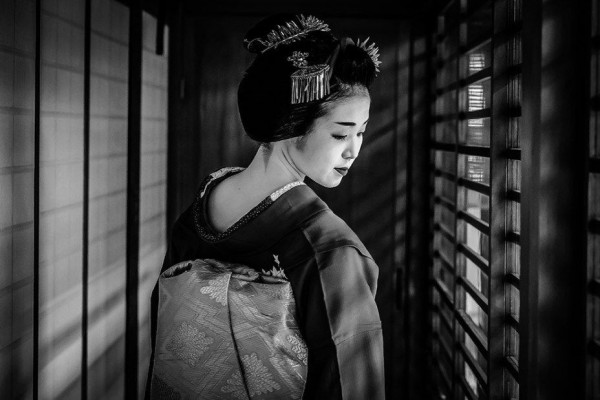
In 1930, a Geisha appeared like a supermodel, beautiful, elegant, having a sexy body and still respecting ancient Japanese customs. And unique, Geisha woman is very close to the genitals that can invite the lust of the adam. This can be seen from the clothes of the geisha (kimono). And what opens is only the back of the neck in the form of V. The longer the V shape downward means that the Geisha is more provocative.

Did you know? Wearing Kimono is not as easy as we imagine. It turns out that the kimono shirt has 12 layers. And it must suit each suit !! At least, it takes more than 1 hour to wear Kimono perfectly.

And after the kimono is used the woman must adjust her movements. To determine the Young Geisha and Senior Geisha, just look at the color of the collar. If the collar is Red, it means Young Geisha, and if the white collar means Senior Geisha.

Problem Hair, Geisha sometimes wear wigs or hair in the form of waxing to make it more fluffy. and what needs to be avoided is too often washing hair or combing his hair which can result in hair loss or curls cannot expand. And in this case, they wash only twice a month.

A skill that must be possessed by a Japanese Geisha
Traditional dancing ability
Singing Ability
Communication skills
Joking ability
The secrecy that a Japanese Geisha should not do when he is entertaining and they must be good at keeping that a secret:

You can’t look sad, let alone cry
May not accept and give love
You can’t choose love
It must not be seen emotional let alone violent
Why? Because what is forbidden is a sacred thing given by God to humans, namely LOVE.

So, Geisha is not a prostitute. They are true art workers, preserving their culture, entertaining and making others happy. But if you see what is sacrificed for a Geisha to be able to entertain it is really ironic and unbalanced.

In the long history of Geisha, there are a number of facts about them. Perhaps, some have watched the film ‘MEMOIRS OF GEISHA’ a story about the life journey of an orphaned woman who was separated from her siblings, and finally educated to become a famous Geisha. Here are the facts:

Honko / Geisha
First we must know, in fact the geisha profession is not always acted by Japanese women. And it is true that even Japanese men choose to become geisha as their profession. Men who become geisha are called Honko, they also do as geisha do, dance, discuss, sing and accompany their guests in restaurants, bars and tea houses. And based on the record that the first geisha, was a man.

Japanese Geisha Artists
The true meaning of the geisha itself is an artist, artist or artist. But many people of the world who consider the geisha profession is no different from prostitution (PSK). If we search for it in the Google search engine, we will find an understanding that states that geisha are Japanese women who are trained to entertain men by talking, dancing and singing.

Even long ago, geisha were forced to perform a ceremony called mizuage. A ceremony welcomes the arrival of adulthood for a woman. During the ceremony the maikos (geisha who are still in education) are sold to the highest bidder to release their girlhood. However the ceremony is considered sacred and the maiko are still respected.

Japanese Geisha Without Identity (Anonimus)
We may know about the features and stories about Geisha. But they were deliberately created as a mysterious woman. To be a geisha is to be an unknown person, and this is conveyed in his education session. The geisha are required to hide everything that refers to their identity, such as names, home addresses and so on. Even though the guest was truly an honorable man.

Japanese Gisha Aurat
A geisha who is serving guests by making tea drinks will attract her kimono, so that the beauty of the skin on her arms can be seen by the man who is her guest. The behavior is a symbol of sensuality or temptation that will be enjoyed by his guests, and it is indeed required.

The Japanese Geisha Stigma
Like everything about geisha is a negative thing, even though there are many things that cannot be imagined from a geisha, especially in the cultural perspective. Their existence and attitude are very exclusive, so it’s no wonder people will say anything beyond the truth. Even with the modern version of geisha, the concept is far from the actual teachings of geisha, changing all the noble values ​​of geisha as performers of art.

Specially Designed Japanese Geisha Kimono
Because geisha is a person who has various skills, even for kimono they make it themselves. Even though many kimonos are sold in clothing stores, of course they are machine-made, but they always sew it themselves with fabrics made of silk. They won’t replace the kimono, as long as they are geisha. In addition to makeup, they spend two hours to make their faces and appearance beautiful and attractive.

Okiya Japanese Geisha
The geisha work in a place called Okiya, and are scouted by an okasan (hostess). But even though they work hard to accompany guests and even look after and take care of their clients’ homes, their wages go into the pocket of an okasan pocket. The money will be saved and used to care for the houses of the geisha (okiya) and maintain the continuity of the business.

Maiko and Hangyoku (young geisha)
Maiko is a term for a young geisha or girl who is undergoing education to become a Japanese geisha in Kyoto City. But in Tokyo this young woman is known as Hangyoku. To distinguish both of them, the Hangyoku wears a longer kimono with varied motifs so it looks more fashionable. While the Maiko are the opposite, they wear the same kimono with each other, even without the motives in their fabric though.

Japanese Geisha May Not Build A Bond Of Love
To say their name and place of origin, geisha are not allowed, let alone have an affair with a man. They are only allowed to have an affair and get married when they no longer work as geisha, or retire.

Toxins in Japanese Geisha’s Makeup
Tragically, they apply makeup to make it look white with lead powder. The dangerous cosmetics element was only discovered when a study was conducted in the Meiji era.

Those are 10 Facts about Geisha. Behind its mysteriousness, behind its graceful movements, behind its tightly closed makeup and kimono clothes, there is also its appeal. Geisha are indeed able to give charm even to the world.

History of Slavery in America

Slavery in America began when African slaves were first brought to the North American colony in Jamestown, Virginia, in 1619, to assist in the production of profitable plants such as tobacco. Slavery was practiced throughout the American colonies in the 17th and 18th centuries, and African-American slaves helped to build the economic foundations of the new nation. The discovery of gin (cotton seed separator) cotton in 1793 established the importance of the center of slavery for the Southern economy.

In the mid-19th century, America’s westward expansion, together with the abolition of the growing right in the North, sparked a huge debate over slavery that would trigger the American Civil War (1861-1865). Although the Union’s victory liberated 4 million nations from slavery, the legacy of slavery continued to influence American history, from the tumultuous years of Reconstruction (1865-1877) with the civil rights movement that emerged in 1960, a century after emancipation.

Background to Slavery in America

In the early 17th century, European settlers in North America turned to African slaves because it was cheaper as labor and more than poor European employees. After 1619, when a Dutch ship carrying 20 Africans in the British colony from Jamestown, Virginia, spread slavery throughout the American colonies.

Although it is not possible to give accurate figures, some historians have estimated that six to seven million slaves were imported into the New World in the 18th century.

In the 17th and 18th centuries, black slaves worked mainly on tobacco, rice and indigo plantations on the south coast. After the American Revolution (1775-1783), many Colonists (especially in the North, where slavery was relatively unimportant to the economy) began to link the black slave’s oppression to the British oppression of them, and called for the abolition of slavery.

After the war with England ended. The new US Constitution quietly recognizes the institution, counting each slave to three-fifths of the people for taxation and representation purposes in Congress. It can be seen that the US wants to form the basis for slavery by giving every right and service.

The Importance of Cotton Separator

At the end of the 18th century, with land used to grow tobacco almost exhausted, the southern Colonies faced an economic crisis, and the growth of slavery in America became increasingly dubious. Around the same time, the mechanization of the textile industry in England caused a huge demand for cotton to America, the yields of southern colonies whose production was unfortunately limited by the difficulty of separating seeds from raw cotton fiber by hand.

In 1793, a Yankee (a resident of the northeastern United States) who was a young teacher named Eli Whitney invented cotton gin, a simple mechanical device that efficiently separated seeds from cotton. the device was widely used, and in a few years, southern America could produce tobacco and cotton on a large scale. This has caused the need for slave labor to increase.

Slavery itself was never widespread in the North, although many entrepreneurs in the region grew rich with slave trade and investment in southern plantations.

Between 1774 and 1804, all northern states abolished slavery, but the so-called “special institutions” remained truly important for the South. Although the US Congress banned African slave trade in 1808, domestic trade was growing, and the slave population in the US nearly tripled in the next 50 years. In 1860 black slaves in America reached nearly 4 million, with more than half living in the cotton-producing countries of the South.

Slaves and Slave Owners

Slaves in America, which is South, are about one third of the southern population. Most slaves lived on large farms or small plantations. Slave owners tried to make their slaves entirely dependent on them, and the system that limited their lives. They are prohibited from learning to read and write, and their behavior and movements are restricted.

Many slaves were used as sexual vents. Those who behave well will get good treatment, while rebel slaves will be brutally punished. A strict hierarchy between slaves, from slaves in a mansion to slaves who became laborers in the rough.

The formation of the hierarchy also triggers them and tends to organize against their masters. Marriage between slaves has no legal basis, but their slaves are allowed to marry and raise their families.

Rebellion by slaves occurred during the enslavement system in America. One of them was carried out by Gabriel Prosser in Richmond (1800) and Danish Vesey in Charleston (1822). The most frightening rebellion occurred in August 1831, led by Nat Turner in Southampton, Virginia. At that time Turnur’s group of about 75 blacks killed around 60 white people.

These rebellions led the camps of slavery supporters to consider that the slaves were barbaric and of low ethics so that they needed slavery to discipline them.

The rebellion that occurred made the southern states of the US strengthen slavery rules by restricting education, freedom of assembly. Unlike in the northern part of the US, the suppression of slavery in the south is fueling an equal movement and abolition of slavery.

The Rise of the Abolition of Slavery

From 1830 to 1860, the abolition of slavery moved in the north of the United States. This movement was led by free black people like Fredrick Douglass and white people like William William Lloyd Garrison, founder of the radical liberation newspaper, and Harriet Beecher Stowe who published the popular novel, “Uncle Tom’s Cabin” (1852).

Meanwhile, many activists who oppose slavery believe that the sale of slaves is a sin, and those who are inclined to non-religionists claim that the sale of slaves is regressive, inefficient, and has little economic value.

The freedom of black people in the north of the US encouraged slaves from the south to flee to the north through a hiding network since the early 1780s. This network known as the Underground Railroad managed to escape the flight of about 40,000 to 100,000 slaves headed north to enjoy freedom.

Slavery Debate in America

The growth and explosion of American expansion westward in the 19th century had an impact on the development of conflict over slavery in America. In 1820 there was a bitter debate about the right of the federal government to limit slavery.

In 1850 it was negotiated on the rules regarding slavery. While all states each have their own legislation regarding slaves, there are many similar concepts that all slave states have. According to slave legislation, teaching a slave to read or write is illegal, although this often happens because children often teach each other.

Although slave legislation has many common characteristics, each state has laws or variations that are compatible with the laws of the place. For example, in Alabama, slaves were not allowed to leave their employers’ grounds without written permission, slaves were also not allowed to trade goods among themselves. In Virginia, slaves were not allowed to indulge in public places within a mile (1.6 kilometers) of their employer’s place or during meetings in public places.

In Ohio an emancipated slave was prohibited from returning to the state where he had been enslaved. In any slave state, slaves were not permitted to carry firearms.

Legislation for the District of Columbia defines a slave as “a human being, whose liberty has been taken for a lifetime, and which belongs to another.”

Civil War and Emancipation
The south reached its peak the following year, when Republican candidate Abraham Lincoln was elected president. Within three months, seven southern states had separated to form the United Confederation; four will follow after the Civil War (1861-1865) began. Despite Lincoln’s established anti-slavery outlook, the purpose of the war was not initially to abolish slavery, but to preserve the United States as a nation.

The abolition of slavery then became a goal in civil war, military needs and growing anti-slavery sentiments in the North, as well as the emancipation of African-Americans. Many black people then joined the American Union forces to fight with the southern region. Five days after the victory of the United States Government in September 1862, Lincoln issued the Emancipation Proclamation and on 1 January 1863 established the abolition of slavery in all US states.

With the enactment of anti-slavery provisions in the US. About 3 million black slaves in the areas of rebellion against the government were freed. About 186,000 black soldiers who initially helped overcome the rebellion then officially joined the US army.

The civil war that ended in 1865 resulted in 38,000 black people being killed. The total death toll is around 620,000 from the US population at that time around 35 million. This is noted as the bloodiest conflict in American history.

Post-Abandoned Periods of Slavery

In the 13th amendment to the US constitution at the end of 1865, it explicitly abolished slavery, although it was still uncertain to fully liberate post-war slavery in the south and the challenges of the Reconstruction Period (1865-1877). At the amendment to the 14th constitution, slaves will be freed and will receive citizenship rights and “equal protection” as US citizens.

Although the constitution guarantees equality of blacks in various fields of life, including American political life. Disappointment persists among black people. Supermasi whites still occur in several US states, such as the development of racist organizations such as the Ku Klux Klan which once triumphed in the south in 1877.

A century later, resistance to racism and discrimination in the United States led to civil rights equality movements in the 1960s achieving political and social benefits.

One figure in equality of rights, Martin Luther King Jr. is a very influential figure in the struggle for equal rights in the United States. He fought for racial equality which was very difficult to obtain at the time. In addition to fighting for racial equality, he is also known as the most influential black figure in the struggle for racial equality in the history of the United States.