Seven Years War

The Seven Years War is a war between the various major powers in Europe. The purpose of the war was to fight over the dominance of this continent, while dominating the oceans and colonies. In the war the alliance of Austria, France, Sweden, Russia and Spain faced off against the combined forces of Prussia, England, Portugal and Hanover.

Background to the Seven Years War
The cause of the Seven Years War was rooted in the results of the previous conflict, the War of Austrian Succession (1740-48). The Aix-la-Chapelle Treaty which ended this war was unable to calm Austria’s anger at the loss of the rich province of Silesia which was captured by Prussia. The treaty was also unable to withstand the conflicting ambitions of French and British colonialism, triggering a new, bigger battle.
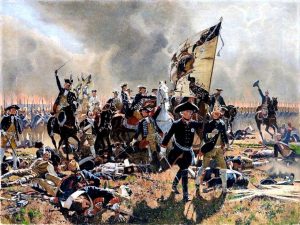
Although the Seven Years War is basically a continuation of the Austrian War of Succession, there are two significant differences compared to the previous war.

The first important difference is that the Seven Years War is truly a global war, requiring a total commitment of resources and all troops. Therefore, the warring countries put all they have to keep on fighting, profit becomes secondary.

The second major difference is the definitive shift in the axis of alliance that had existed during the first half of the 18th century. Austria and Britain, longtime allies, violated their agreement and Austria sided with France which was previously its enemy. Prussia in turn severed relations with France and sided with Britain.

The main figures in the Seven Years War are Queen Maria Theresa of Austria; George II and then George III of England; Louis XV from France; Frederick II (later known as Frederick the Great) of Prussia; and Queen Elizabeth from Russia.

Strength of each country

Prussia

At the beginning of the war, Prussia had 145,000 troops and was considered the most effective in Europe in fighting linear formations. This is achieved by thorough, disciplined training.

In the period after the Austrian War of Succession, Frederick II had also reformed the heavy cavalry to become the best in Europe. The greatness of the European cavalry succeeded in causing a surprise blow to their enemies.

The Prussians had a very organized system in maintaining the stability of their army in the field. The canton system introduced in the 1720s and 1730s regularly called all able-bodied men in certain districts to be selected. The best people will proceed to regular units for compulsory military training. They will practice with a regular regiment for a year, while the rest will train with garrison regiments in the area.

English

Before the war began, Britain had around 90,000 troops. The number of troops reached nearly 150,000 during the war, but finding enough soldiers for the army was a problem in itself. To fill the ranks of the Royal Navy and local British militias, many pulled prisoners from prison. Most of the soldiers were then stationed abroad.

The greatest strength of the British army during the Seven Years’ War was its ability to adapt to various conditions. When soldiers are asked to fight in North America, it becomes clear that traditional linear tactics are not suitable for fighting in heavily forested areas on the border. To be effective in the forest, soldiers must use light weapons so they can move quickly.

Russia

The strength of the Russian army is 333,000 people, divided into 174,000 field troops and the rest are militia and garrison troops. During the war, Russia usually only uses between 60,000 and 90,000 people for one campaign.

The superiority of the number of troops is Russia’s biggest asset. The Russians were able to provide more reinforcements than Prussia predicted. Reforms have been arranged to improve the army, but were only implemented when the war began and showed little meaningful results at the end.

Austria

The Austrian army stood in 201,000 troops in 1756. The Austrians had formed a reform commission after the defeat of the Silesian War of 1748. Intensive training was also carried out in all branches. The strength of armed Infantry is increased, although it is still not to the same level as Prussia. To balance out Prussian fighting strength, Austria relied on a defense strategy.

French

The Seven Years War marked the lowest point for the French army in the 18th century. The number of troops numbered more than 200,000, but had poor capabilities. Low quality of leadership, lack of discipline, lackluster officers and delays in implementing the necessary reforms are the cause of this.

But there were some exceptions to the rules among the French troops in the colonies. French troops stationed in North America are border troops who are highly trained with their linear strategies. England learned from their initial defeat to implement tactics similar to their own training strategies.

French East Indian Company troops are also of high quality. In the late 1740s they used indigenous troops (Indian tribes) in linear warfare. As in North America, the British learned from the defeat and applied French theory to their own troops in the region or India.

However, the French could not strengthen their colonial power after 1758 the British Royal Navy succeeded in blocking French naval access to their own colony. At the same time, the British continued to strengthen their colony outnumbering the French.

The course of the Seven Years War
The war began in 1756 and lasted for seven years. In the early days of this war France and Austria dominated the war, so both were predicted to win the war.

However, Britain under Prime Minister Pitt the Elder soon joined Prussia. Prussian glorious victory in the battle against France at Rossbach in 1757. The victory at Rossbach marked the turning point of the war.

After winning at Rossbach, Prussia again reaped victories at Leuthen against Austria and at Zorndorf against Russia. The Prussian victory followed the British victory over France at Plassey in India and in Quebec, Canada.

In 1759, fighting intensified, marked by the victory of the Anglo-Prussian forces over the French in Minden, Germany. Meanwhile, the British navy also carve brilliant results by defeating the French fleet in the Gulf of Quiberon. The Anglo-Prussian Alliance continued to carve victory, after in 1760 the British captured Montreal, Canada.

To avenge Prussian victories, Austria and Russia increased the number of troops. The addition of these troops made Prussian troops change their war strategy to survive to withstand the onslaught of these troops.

Prussia was almost destroyed, but was saved by the death of Russian Tsarina, Elizabeth, who died in 1762. The new Tsar Peter III pulled Russia out of war and left Prussia and Austria facing each other to fight over Silesia and Saxony.

The Prussians were able to achieve excellence in both provinces. But the war never reached its final destination, because both parties were exhausted and had run out of war resources. Peace becomes the only way that can be taken. Therefore, an Austrian envoy arrived to open peace negotiations on November 29, 1762.

Elsewhere, with the rise of George III to the English throne in 1760, British strategy began to change. George III paid more attention to the war in the colony and less concerned with the war in Germany.

In October 1761, the alliance of the British government William Pitt and the Duke of Newcastle who had promoted a joint colonial / continental war officially ended. Lord Bute became chief minister and the British began to leave Prussia both politically and financially.

Initially the two countries had agreed not to negotiate with any party unless agreed, but Britain violated this agreement when they began submitting negotiations to France. The British attitude caused a serious rift between Prussia and England.

End of the Seven Years War

The Seven Years War finally ended with two separate peace treaties. First, the Paris Agreement, involving Great Britain, France, and Spain and was signed on February 10, 1763. Under its conditions, Britain obtained Canada, Cape Breton Island, Newfoundland, the Ohio River valley, and all lands east of the Mississippi River.

France relinquished all claims to New France by receiving rewards for only two islands off the coast of Newfoundland, St. Pierre and Miquelon. France also accepts Martinique, Guadeloupe and Marie Galante in the Caribbean, while Britain maintains Grenada and all Lesser Antilles except St. Lucia.

Britain was also the dominant European power in the Carnatic and Bengal regions of India, while Pondicherry was returned to France. Belle Isle (off the coast of France) was given back to France in return for the Minorca region and Britain returned Goree in West Africa in return for Senegal.

France also agreed to evacuate all of George III’s territory in Germany and its allies. Britain returned Cuba and the Philippines to Spain as a substitute for Florida and withdrawal from Portugal.

Austria and Prussia signed the Hubertusburg Peace Treaty on February 15, 1763. All 1756 borders were restored. Austria withdrew from Silesia and Prussia withdrew from Saxony. Silesia remained a part of Prussia and the division of Prussia as a state did not occur. In fact the outcome of the war actually strengthened Prussia’s role as a major European power.
Korean War

The Korean War was the first major conflict that occurred during the Cold War. The conflict between North and South Korea took place between June 1950 and July 27, 1953. The war known as the forgotten war claimed millions of lives. All of Korea embraced a terrible destruction and took decades to recover.

Historical Background of the Korean War

Korea is an area that is not too broad, because it only occupies 85.246 square miles of land. The Korean region is more of an archipelago, with a coastline of 5,400 miles and is heavily influenced by the sea.

Before 1945, Korea was a unity. The kingdom of ancient Korea was united by the Tang Dynasty in 668 AD. This united Korea survived for 1300 years before it finally broke.

Korea was split into two parts after maneuvers carried out by the Allies towards the end of World War II. During the war, Korea was a territory controlled by Japan. However, after Japan’s defeat in World War II, Korea was divided into two parts in the 38th parallel. The Soviets occupied North Korea, while the United States occupied the south.

After Korea was separated, the two superpower countries had invested in each other in mainland Korea. With the intensification of the World War between the Soviets and the United States, the dividing lines of North and South Korea became a new iron curtain that separated Koreans from each other. Although separated by the two parts of the region, it became a show of strength of the Soviet Union and the United States. Thus, conflicts between the two are very likely to occur.

North Korea’s leader, Kim II Sung is very ambitious to unite Korea. Therefore, he asked for the support of the Soviet Union leader, Joseph Stalin in April 1950. Stalin finally agreed to support the North Korean invasion of South Korea. He only asked Kim to ensure that the victory could be achieved and the Soviets would not intervene directly.

After obtaining Stalin’s support, Kim then visited the leader of the Chinese Communist Party, Mao Zedong in Beijing. Mao agreed that only military power could unite Korea. He also doubted the United States would pay attention to the war in Korea.

While Kim confidently told Mao that his army would rule all of Korea within three weeks, long before American intervention might occur.

The start of the Korean War

The war began on Sunday morning, June 25, 1950, after the North Korean People’s Army (NKPA) crossed the thirty-eighth parallel, supported by Soviet-made T-34 tanks. The attack was unexpected both in time and intensity.

Meanwhile, the Republic of Korea (South) forces who were not yet well-trained or had the weapons to meet the challenge withdrew. NKPA moved quickly, took over the Korean capital in Seoul, and then crossed the Han River and went west to the Kum River, then south to Taejon and Taegu. North Korea, under the auspices of the Soviet Union, wishes to make all of Korea a communist regime.

US President, Harry S. Truman, ordered US ground and air forces to evacuate residents. He also ordered the US Seventh Fleet to go to the Taiwan Strait to prevent confrontations between the Communists and Chinese Nationalists.

Within two days, the United Nations adopted a resolution proposed by the United States, which called on the troops of the People’s Democratic Republic of Korea to withdraw.

Although called upon to withdraw, the North Korean People’s Army moved further south. Truman who was worried about the power of North Korea authorized General Douglas MacArthur to send ground troops. Despite the presence of American troops, North Korean troops continue to move south.

The 24th Infantry Division, led by General William Dean, was the first to react to hampering the North Korean army. The division was then assisted by the Fifth Air Force who was transferred to Korea, although in the end it still could not stop the NKPA’s power.

In late July 1950, the United Nations took a position along the Naktong Perimeter to consolidate its forces consisting of: the First American Cavalry Division, the Second Infantry Division, the 24th Infantry Division, the 25th Infantry Division, and the First Marine Brigade, and five South Korean infantry divisions.

Immediately after the call from the United Nations, member states began sending troops and supplies. Britain was the first country to respond, placing their ships in Japanese waters under the command of the United Nations. Most countries cannot send many troops, but 17 have succeeded in giving at least financial strength to the United Nations Command.

Battle at Inchon and Yalu
On September 15, 1950, after expanding troops and building supply lines, General MacArthur began planning a plan which he had considered from the start. The operation was called Operation Chromite, which is the amphibious troop landing at the west coast port of Inchon.

As a preparation, he formed the X Corps under the command of General Edward (Ned) Almond. The force consisted of the Seventh Infantry Division (Army) and the First Marine Division. X Corps moves around the southern tip of Korea. Amphibians then landed on the morning of September 15, 1950 and within a few days had taken control of Inchon and the Kimpo Airfield. In October, Seoul was regained and returned to President Syngman Rhee.

Meanwhile, the Eighth Army under the leadership of Lieutenant General Walton H. Walker had crossed the line and moved north quickly. They cut off supply and communication lines, so NKPA was forced to withdraw. Two successes of the operation left the UN forces in thirty-eight parallels in early October. In many ways the war may have ended at this time.

However, this favorable situation was considered the right time for the United States to occupy all of Korea and restore it as a unitary state. After obtaining permission from the Joint Chiefs of Staff and the United Nations, UN and Republic of Korea troops crossed the thirty-eight parallel and moved north.

Meanwhile the Eighth Army headed to the western side of the mountains, and the X Corps which had been moved by sea to the port of Wonsan, moved to the east side. Communication between the two forces is difficult. On Thanksgiving, the 17th Infantry Regiment in the US reached the Yalu River. It was at this point that the counterattack from South Korea and its supporters began.

The joining of China in the War
The People’s Republic of China has warned that if UN troops cross the thirty-eighth parallel, they will enter the war. But General MacArthur assured President Harry S. Truman that the threat would not occur.

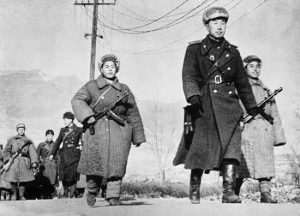
In mid-October 1950, there were clashes with the Chinese army. Then, on November 23, nearly 200,000 Chinese troops attacked. They passed the frozen Yalu River and gathered strength during November. The UN Command was hit hard by China, so Walker began to withdraw and evacuate troops by sea as much as possible.

To the east, X Corps also suffered defeat. Soldiers and Marines are pulled out under heavy pressure from the Chinese attack and the weather has fallen almost 40 degrees below zero Fahrenheit. When the army and marines retreated to the port of Hungnam, the navy began evacuating on Christmas Eve.

Nearly 100,000 UN and Republic of Korea troops, as well as most refugees, were evacuated. By December 25, the port had been destroyed, and most UN troops headed for Pusan ​​and other ports along the coast. Seoul was once again abandoned on January 3, 1951.

From then until the end of the war, China played a dominant role, not only in the procurement of military and civilian equipment and equipment, but also in the direction of strategy. Although the North Korean army continues to play an important role, both military authorities and civilian historians identify this Chinese attack as marking a new phase of conflict. In addition, China will also play a major role in negotiations which began in 1952.

The War on the Hills and the Long Debate Begins
General Walton Walker died in a jeep accident towards the end of December 1950. His successor, General Matthew B. Ridgway, arrived at Christmas and began the process of rebuilding the Eighth Army whose morale was destroyed after losing.

The effort was successful, Seoul was recaptured and on March 27, 1951. The Eighth Army kept moving until it reached the thirty-eighth parallel. In Operation Rugged, Ridgway’s forces established the Wyoming and Kansas Lines, which would become the main line of resistance for the entire war.

In early 1952, most of the territorial rights had been severed, and in early November 1952 the United Nations Command adopted a defensive policy and began inviting the communists to negotiate.

During this period military operations were not carried out in large numbers, but the war was focused on hills, outposts, and small bunkers. This is because the number of troops and supplies is decreasing on both sides. Soldiers and machines are limited by the scope of tasks, such as destroying a fortress, dismantling a bunker or disrupting supply lines.

The battle was confined to the hills, and the units involved were often no more than a company of troops. Success or failure at the conference table is reflected in success or failure on the ground. Peace talks continued, as the fighting in the hills was still fierce.

The United Nations and communist countries entered into negotiations with very different concepts and desires. In addition, problems arise around prisoners of war between the two parties. The negotiation process was very slow and frustrating, talks were stopped many times, and consequently reflected the political atmosphere rather than the military.

End of the Korean War: Weapons
Shortly after Joseph Stalin’s death on March 5, 1953, the communists returned to the negotiating table and agreed to exchange prisoners. Changes in the international environment were reflected in various peace proposals offered. However, the clash of weapons depends on the agreement on the exchange of prisoners of war …

Whatever affects the achievement of the final agreement is difficult to ascertain. Certainly included the death of Joseph Stalin and Soviet domestic problems. The truce was signed by General William K. Harrison and General Mark Clark for the United Nations, Marshal Peng The-huai for the Republic of China, and Marshall Kim Il Sung and General Nam Il for North Korea. The Republic of Korea did not sign the agreement.

Despite having reached the ranks of weapons, there are still large numbers of North Koreans and a much smaller number of South Koreans refusing to be repatriated. Thus creating new disputes in the future between the two Koreas.

The Korean War brought huge losses to both sides. At least 33,741 US troops were killed in military action, 2,827 were killed in war-related situations, and 103,284 injured. While the death toll for the Republic of South Korea alone reached 59,000 killed and 290,000 troops wounded, plus civilian casualties that were enough to bring the toll to almost three million people.

More casualties were on the side of North Korea and China, at least 500,000 troops were killed and one million injured.

For material losses, South Korea was the most disadvantaged. Some villages were lost to the war and Seoul, the nation’s capital, was mostly razed to the ground. Railroad lines, communications, entire state infrastructure, hydroelectric power plants, factories, civil buildings, even farms and rice fields were destroyed.

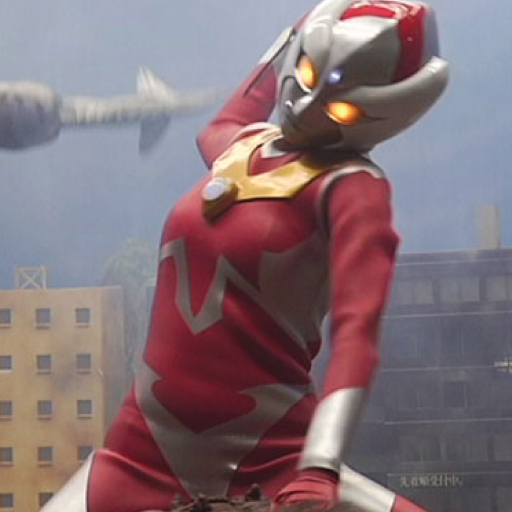
巨大ヒロイン(R) ステラレディー・マキヤ 怪獣大戦争

巨大ヒロイン(R) ステラレディー・マキヤ 怪獣大戦争
作品番号GRET-01
定価10800円
ダウンロード3240円/3240PT
出演女優 堀口奈津美
監督式正義
収録時間本編61分 メイキング22分
リリース日2011/04/08
レーベル / メーカー G-GREAT 
シリーズ 巨大ヒロイン 
販売形態 英語字幕作品  【月額見放題】プラチナムプラン本編 
ビットレート 通常版ダウンロード:2500kbps
字幕版ダウンロード:1500kbps
月額ストリーミング:1000kbps

宇宙の果てからやって来たステラレディーは地球守備隊の紅一点シノ・サヤカとして地球の平和を守っていた。そんなある日、東京の中心部に縄文時代以前に栄えた超古代文明クスカの遺跡が発見される。昨今頻発する怪獣出現との関連を探るために地球守備隊の面々が発掘現場に急行するがそこに現われたのは善良そうなプティモンという怪獣だったのだ。何かのメッセージを伝えようとするプティモンを本部に連れ帰ったサヤカだったが天噛博士の言語解読装置によって恐るべきメッセージを解読する事に。プティモンはクスカ文明を復活させるために人間社会を滅ぼそうと画策していたのだ。サヤカはプティモンの催眠術によって自由を奪われプティモンに犯され、ステラレディーの秘密を分析されてしまう。サヤカはステラレディーに変身してプティモンの策略を阻止しようとするがステラレディーを待ち受けていたのは4体の巨大怪獣だった。絶体絶命のピンチをステラレディーは切り抜けることができるのか![BAD END]

今回の巨大ヒロインは巨大新レーベル第一弾の作品として、賑やかな世界を描こうと思いました。ステラレディーのスーツは初めてウェットスーツを使用しました。昔の特撮の雰囲気が良く出ているんじゃないかと思います。

Social Media: Instagram – YouTube – PlayStore – Website

Support For Update Full Movie: Donate

Japanese Huge Heroine (R) Stella Lady Makiya Monster Big War

Huge Heroine (R) Stella Lady Makiya Monster Big War
Work number GRET-01

Actress Natsumi Horiguchi
Supervisory justice

Label / Manufacturer G-GREAT
Series Huge Heroine

Stella Lady, who came from the end of the universe, was protecting the peace of the earth as the Earth’s garrison’s red point Shino and Sayaka. One day, the ruins of the ultra ancient civilization Cusca, which flourished before the Jomon period, are found in the center of Tokyo. The various members of the Earth garrison rushed to the excavation site in order to investigate the connection with the monster appearance that frequently occurs these days, but it was the monster named Petiton that appeared to be good there. It was Sayaka who brought Petitmon to the headquarters to try to convey a certain message, but in order to decipher a formidable message by Dr. Tenji’s language decoding device. Petitmon was trying to destroy human society in order to revive the Cusca civilization. Sayaka is deprived of liberty by Petiton’s hypnosis and committed to Petiton, who analyzes Stella Lady’s secret. Sayaka turned into Stella Lady and tried to stop Petiton’s tricks, but it was four giant monsters waiting for Stella Lady. Can Stella Lady survive the pinch of desperate life!

This huge heroine was the first work of a huge new label, I thought to draw a lively world. Stella’s suit used wetsuit for the first time. I think the atmosphere of the old-fashioned special effects is well out.

Related Ultrawoman Movie:

– Huge Heroine Ultrawoman Red Gades Leona And Asura

– Ultrawoman Huge Heroine (R) Greysis Nasty Project

– Superheroine Ultrawoman Next Lady Gregors Hen

Japanese Huge Heroine (R) Fire Woman

– Japanese Ultrawoman Huge Heroine (R) Machine Ready GREAT

Social Media: Instagram – YouTube – PlayStore – Website

Support For Update Full Movie: Donate